
Does Online Tennis Coaching Work?
A player sends video after video, hits hundreds of forehands, and still feels the same late contact, the same unstable racket face, the same missed ball down the line. That is the real question behind does online tennis coaching work. Not whether video exists. Not whether apps exist. Whether an online coach can actually change a stroke in a way that holds up under pressure.
The short answer is yes. Online tennis coaching works when the teaching is precise, the feedback is specific, and the method is built to correct cause instead of chasing symptoms. It fails when it becomes generic advice, slow responses, or random tips that leave players guessing.
Does online tennis coaching work for real stroke change?
If the goal is fitness, motivation, or basic repetition, almost any coaching format can help. If the goal is fixing a forehand or backhand with lasting technical change, the standard is higher. Players do not need more opinions. They need correct diagnosis, clear instruction, and a sequence that gets the body to repeat the right movement fast.
That is where online coaching either proves itself or gets exposed.
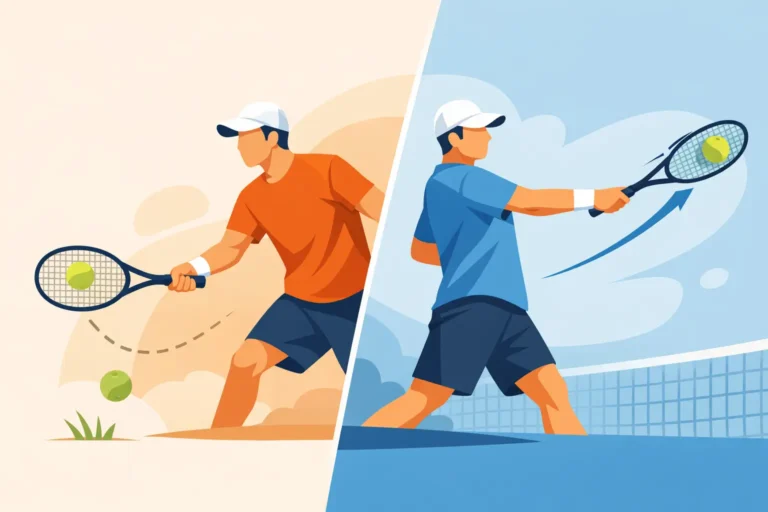
A lot of players assume in-person coaching must always be better because the coach is physically there. That sounds logical, but it is not automatically true. A coach standing next to you can still miss the real problem. A coach watching video carefully, frame by frame, can often identify technical errors more accurately than someone feeding balls and talking between shots.
What matters is not distance. What matters is whether the coach can see the stroke clearly, explain the correction clearly, and guide repetition in a way that produces measurable change.
Why online coaching works better than many players expect
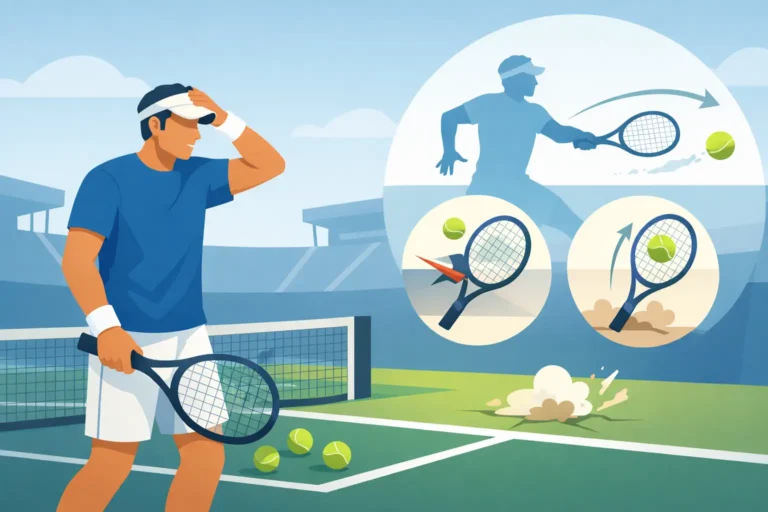
Tennis technique is visual. Contact point, shoulder alignment, racket path, spacing, preparation timing, and weight transfer can all be observed on video. In many cases, video is not a compromise. It is an advantage.
Players also benefit from something traditional lessons often lack – a permanent record. When a player receives precise online feedback, they can rewatch the correction, compare old and new swings, and train with the lesson beside them instead of relying on memory. That removes one of the biggest problems in tennis coaching: forgetting what the coach said the moment the session ends.
Online coaching also strips away wasted time. There is less dead space, less casual rallying without purpose, and less confusion between what felt better and what was actually correct. A good online lesson gets straight to the fault, the fix, and the repetition pattern needed to lock it in.
For serious players and coaches, this is not a small benefit. It is the difference between training with direction and training with hope.
When does online tennis coaching work best?
Online coaching works best when the player wants technical correction, not just a workout. It is especially effective for groundstrokes because forehand and backhand mechanics can be broken down with precision and rebuilt in a structured way.
It also works best for players who are coachable. That does not mean talented. It means willing to follow instruction exactly, send honest video, and repeat the assigned movement instead of improvising. The fastest improvements happen when players stop mixing five different tips from five different sources.
For coaches, online learning is powerful because it sharpens the eye. A coach who understands exactly why a stroke breaks down can diagnose players faster and teach with more authority. That is a major advantage in a competitive coaching market.
The format is also ideal for players who do not have access to high-level instruction locally. Geography stops mattering when the teaching method is strong enough to travel.
What makes online tennis coaching fail?
Most online coaching failures come from one of three problems.
The first is vague feedback. If a coach says, “use your legs more” or “finish higher” without identifying the actual cause of the breakdown, the player ends up layering guesses onto a faulty motion. That creates frustration, not improvement.
The second is poor structure. A player cannot fix a stroke through scattered comments. Technical change needs progression. One correction must lead to the next. If the method is not systematic, results become inconsistent.
The third is delay. Feedback that arrives too late loses power. If a player repeats the wrong pattern for days before correction arrives, bad habits get reinforced. Effective online coaching depends on timely response and a tight feedback loop.
This is why some players try online coaching once and decide it does not work. In reality, weak coaching does not work. The format is not the issue.
The difference between watching tips and getting coached
A lot of players confuse online tennis coaching with tennis content. They are not the same thing.
Watching a video tip can be useful, but it is general by design. It speaks to a broad audience. It cannot tell you whether your backswing is the issue or your spacing, whether your non-dominant side is collapsing or your contact point is late.
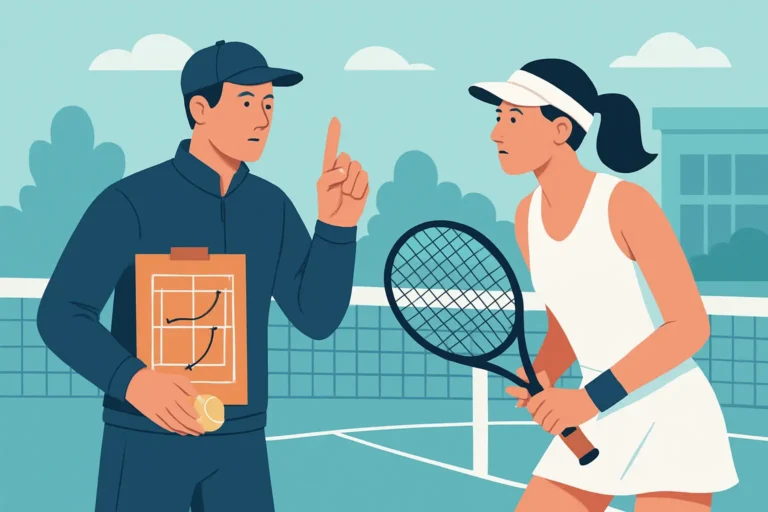
Coaching is personal. It identifies your exact technical error and gives you the exact correction. That is why random online instruction often produces temporary improvement at best, while true online coaching can produce fast transformation.
The strongest systems go even further. They do not just explain what is wrong. They teach in a way that makes the player feel the correction clearly and repeat it under guidance. That is why Mili’s Split Method stands out. It was built specifically to correct groundstroke problems quickly, with online lessons that players often describe as feeling like the coach is on court with them.
Can online coaching really replace in-person lessons?
Sometimes yes. Sometimes no. The honest answer depends on the goal.
For stroke correction, online coaching can absolutely match or outperform many in-person lessons. Video allows detailed review, clearer comparison, and focused correction without distractions. If the coach has a proven method, the player can make rapid progress.
For live movement drills, point construction in real time, or supervised feeding patterns, in-person coaching still has advantages. There are moments when court presence helps. But that does not weaken the case for online coaching. It simply defines where each format is strongest.
Many serious players now use both. They use online coaching to fix the technical core and in-person court time to apply it. That combination is efficient and often more effective than relying on either format alone.
How to tell if an online tennis coach is worth trusting
Do not judge by personality. Judge by clarity and results.
A serious online coach should be able to identify the problem quickly, explain it in plain language, and show a repeatable pathway to correction. They should not hide behind theory, overcomplicate the stroke, or flood the player with ten adjustments at once.
Look for evidence of consistency. Can they fix the same category of stroke issue across different players? Do they teach with a defined method or just react to each video with new advice? Do they stand behind the result with confidence?
This matters because tennis players are tired of paying for lessons that sound smart and change nothing. A coach who truly understands stroke mechanics does not speak in circles. They teach decisively.
So, does online tennis coaching work?
Yes, and for the right player with the right coach, it works exceptionally well.
It works because tennis technique can be seen, measured, corrected, and repeated through video-based instruction. It works because players improve faster when feedback is specific and stored for review. It works because a strong method removes confusion and turns technical change into a process instead of a guessing game.
But it does not work by default. It works when the coaching is exact, the system is proven, and the player is willing to follow instruction without drifting into old habits. That is the standard.
If your forehand or backhand has been stuck for months, or years, the issue is probably not effort. It is likely that nobody has isolated the real cause and corrected it in the right order. Once that happens, progress stops feeling slow and starts feeling obvious.
That is the value of serious online coaching. It does not ask for blind faith. It proves itself through cleaner contact, stronger timing, and strokes that finally hold up when the rally gets real.
The right lesson should not leave you with more things to think about. It should leave you hitting the ball better.