

The Lawn Tennis Association (LTA) has established itself as the governing body for tennis in Great Britain, setting standards for coaching excellence that influence the sport across the nation. For aspiring and current tennis professionals, understanding the LTA coach framework is essential for building a successful coaching career. Whether you're just starting your journey or looking to advance your existing credentials, the LTA coaching pathway offers structured development opportunities designed to elevate your skills and professional standing.
Understanding the LTA Coach Accreditation Framework
The LTA coach accreditation system represents a commitment to maintaining high standards within the tennis coaching profession. This framework ensures that coaches meet specific criteria related to qualifications, safeguarding, insurance, and ongoing professional development.
Becoming an accredited LTA coach involves more than simply passing a qualification course. The LTA Coach Accreditation scheme establishes clear benchmarks that coaches must meet to demonstrate their competence and professionalism. The accreditation process validates that coaches possess both the technical knowledge and practical skills necessary to deliver quality instruction.
Two Tiers of Accreditation
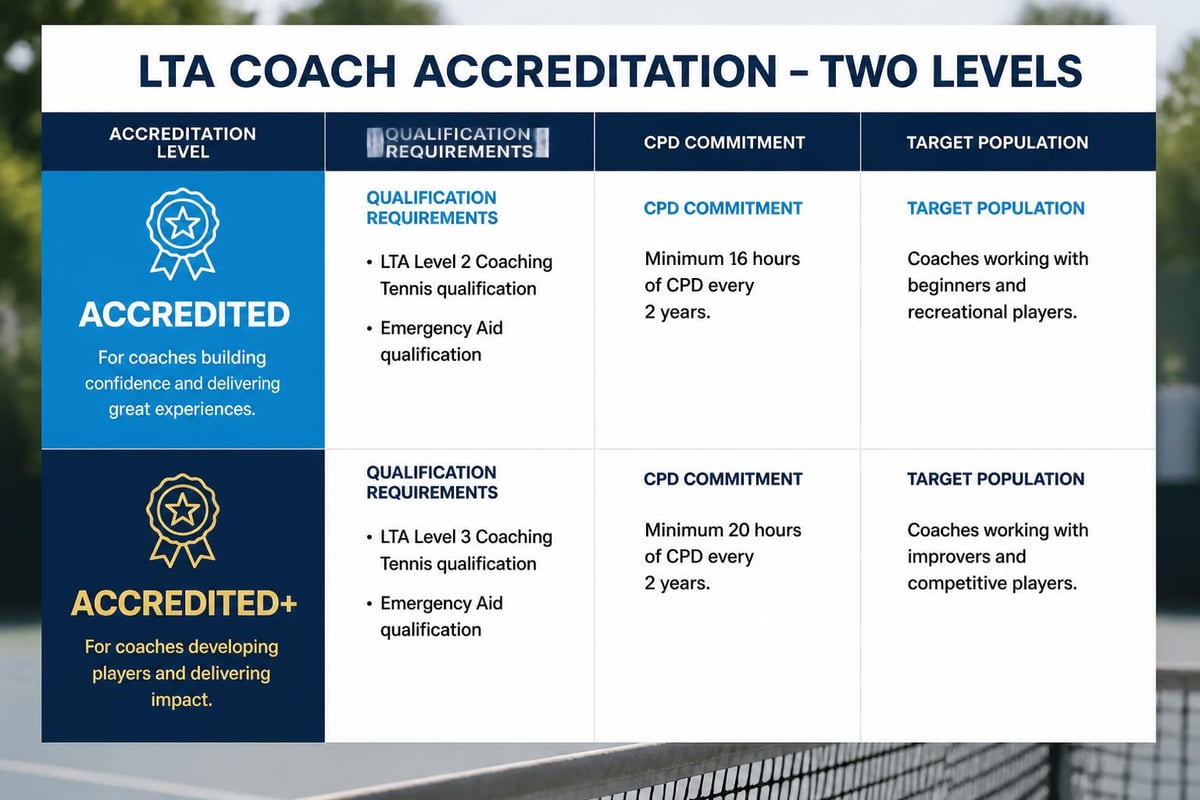
The LTA offers two distinct accreditation levels, each designed for different stages of coaching careers:
| Accreditation Level | Requirements | Best For |
|---|---|---|
| Accredited | Level 2 qualification, safeguarding, first aid, insurance, CPD | Part-time coaches, volunteers, those starting out |
| Accredited+ | Level 3+ qualification, enhanced CPD, coach development plan | Full-time professionals, competitive player coaches |
The Accredited tier serves as the entry point for coaches working with recreational players and beginners. It requires completion of a Level 2 coaching qualification, current first aid certification, safeguarding training, public liability insurance, and commitment to continuous professional development.
Accredited+ status represents the higher tier, designed for coaches working with competitive players or operating as full-time professionals. This level demands a Level 3 or higher qualification, a comprehensive coach development plan, and enhanced CPD requirements that demonstrate ongoing commitment to excellence.
The LTA Coach Qualification Pathway
Understanding the qualification structure is fundamental for anyone pursuing a career as an lta coach. The pathway begins with foundational courses and progresses through increasingly advanced levels.
Level 1: Assistant Coach
The Level 1 qualification introduces candidates to basic coaching principles. This entry-level course covers fundamental tennis skills, simple coaching techniques, and basic court safety. Level 1 coaches typically work under supervision, assisting more experienced professionals with group sessions and basic skill development.
Level 2: Coach
Level 2 represents the core qualification for independent coaching. Coaches at this level can deliver sessions independently, working with beginners and intermediate players. The curriculum expands to include stroke development, tactical awareness, and session planning for various age groups and abilities.
Level 3: Senior Coach
Level 3 elevates coaches to senior status, equipping them to work with competitive players and advanced recreational athletes. This qualification demands deeper understanding of technical mechanics, periodization, competition preparation, and athlete development principles. Many full-time coaches hold Level 3 certification as their primary credential.
Level 4 and Beyond
The highest levels (4 and 5) prepare coaches for elite performance environments, working with national-level competitors and professional players. These advanced qualifications focus on high-performance coaching methodologies, sports science integration, and complex program design.
The comprehensive coaching pathway provides detailed information about each qualification level, including prerequisites, course content, and assessment criteria.
Continuous Professional Development for LTA Coaches
Maintaining accreditation as an lta coach requires ongoing learning and skill development. The LTA has established robust CPD frameworks to ensure coaches remain current with evolving best practices and coaching methodologies.
CPD opportunities come in various formats:
- Workshops and seminars on specific technical or tactical topics
- Webinars featuring experts from Britain and internationally
- Independent learning through reading, video analysis, and research
- Mentoring programs pairing experienced coaches with developing professionals
- Conference attendance at national and regional coaching events
The coach development resources offered by the LTA provide structured learning pathways aligned with different coaching specializations and career goals. Coaches must accumulate specific CPD points annually to maintain their accredited status, with Accredited+ coaches held to higher standards reflecting their advanced professional standing.

The 2026 LTA Coach Development Transformation
The LTA has undertaken a significant initiative to reshape coach development and education. These transformation plans aim to create a more supportive, comprehensive framework for coaches at all stages of their careers.
Key Elements of the New Framework
The transformation focuses on three primary pillars:
Unified qualification structure that creates clearer progression pathways and reduces redundancy in training requirements. This streamlined approach helps aspiring coaches understand exactly what steps they need to take to advance their careers.
Enhanced support systems provide coaches with access to mentoring, business development resources, and peer networking opportunities. These support mechanisms address the reality that coaching success requires more than technical knowledge-it demands business acumen, communication skills, and professional resilience.
Flexible learning options recognize that many coaches balance their development with existing coaching responsibilities. Blended learning approaches combine online modules with practical in-person training, making qualifications more accessible.
The transformation represents the LTA's recognition that attracting and retaining quality coaches requires comprehensive support beyond initial certification. This holistic approach aims to build a stronger, more sustainable coaching workforce across Britain.
Specialization Opportunities for LTA Coaches
While traditional tennis coaching remains the foundation, modern lta coach professionals increasingly pursue specialized areas to differentiate themselves and serve specific player populations.
Performance Coaching
Performance coaching focuses on competitive players ranging from regional juniors to national-level competitors. This specialization requires deep understanding of competition preparation, mental skills training, and periodized program design. Performance coaches often work closely with parents, strength coaches, and other support professionals.
Disability and Inclusive Tennis
Wheelchair tennis, deaf tennis, and adaptive programs for players with various disabilities represent growing areas within British tennis. Specialized training helps coaches understand specific modifications, equipment adaptations, and communication strategies for inclusive coaching environments.
Padel Coaching
The rapid growth of padel has created new opportunities for tennis coaches willing to expand their expertise. The padel coach development pathway offers specialized training for coaches transitioning from traditional tennis or entering the sport specifically for padel instruction.
For those looking to truly distinguish themselves in the coaching marketplace, innovative methodologies can provide significant competitive advantage. Programs like Tennis Method Mili Split’s coaching certification offer unique approaches to technical instruction that complement traditional LTA training with specialized stroke correction techniques.

Building a Sustainable LTA Coaching Career
Certification and accreditation form the foundation, but building a thriving coaching practice requires additional business and professional skills.
Establishing Your Coaching Business
Most lta coach professionals operate as self-employed contractors, requiring entrepreneurial mindset alongside coaching expertise. Key business considerations include:
- Venue partnerships with clubs, schools, and community facilities
- Insurance coverage appropriate for your coaching activities and client base
- Marketing strategies to attract and retain students
- Pricing structures that reflect your qualifications and market positioning
- Administrative systems for scheduling, payments, and client communication
Developing Your Coaching Philosophy
The most successful coaches develop distinct teaching philosophies that guide their instruction. This philosophy encompasses your beliefs about player development, technical fundamentals, competitive preparation, and athlete well-being. A clear coaching philosophy helps you make consistent decisions and communicate your approach to prospective clients.
Creating Multiple Income Streams
Relying solely on individual lessons can create income instability. Diversified coaching businesses typically include:
| Income Source | Characteristics | Scalability |
|---|---|---|
| Private lessons | High revenue per hour, limited by time | Low |
| Group clinics | Moderate per-student rate, serves multiple players | Medium |
| Holiday camps | Intensive periods, bulk enrollment | High |
| Online coaching | Location-independent, asynchronous delivery | Very high |
| Coach education | Training other coaches, leverages expertise | Medium |
Online coaching has emerged as particularly valuable, allowing coaches to serve players beyond their geographic area and providing flexibility for both coach and student schedules. Understanding effective online tennis instruction methods can open new revenue opportunities while expanding your impact.
Staying Current in the Coaching Profession
The tennis coaching landscape evolves continuously, with new research in biomechanics, sports psychology, and motor learning reshaping best practices. Successful lta coach professionals commit to lifelong learning beyond minimum CPD requirements.
Resources for Ongoing Learning
The LTA Coach Development Podcast provides monthly insights from experts discussing player development, business growth, and professional evolution. These conversations offer practical strategies and theoretical frameworks applicable to coaches at all levels.
Professional reading should extend beyond tennis-specific materials to include broader sports science literature, psychology research, and business development resources. Understanding periodization principles from strength and conditioning, motivation theories from educational psychology, and marketing concepts from business literature enriches your coaching toolkit.
Peer Learning and Mentorship
Connecting with other coaches creates opportunities for knowledge exchange and collaborative problem-solving. Many regions have coaching networks or informal groups where professionals share experiences and discuss challenging situations.
Seeking mentorship from more experienced coaches accelerates your development by providing personalized guidance and perspective. Conversely, mentoring newer coaches reinforces your own knowledge and contributes to the profession's overall quality.
Common Challenges for LTA Coaches
Understanding typical obstacles helps aspiring and current lta coach professionals prepare effective strategies for navigating their careers.
Client Acquisition and Retention
Building a full coaching schedule rarely happens overnight. Most coaches invest significant time in networking, demonstrating their expertise through free clinics or demonstrations, and building reputation through word-of-mouth referrals. Patience and persistence prove essential during the establishment phase.
Retaining clients requires consistent quality, clear communication about progress, and appropriate program progression. Players discontinue coaching when they feel stagnant or uncertain about their development trajectory.
Work-Life Balance
Coaching schedules often concentrate around before-work, after-school, and weekend hours when clients are available. This can create challenging work patterns with limited flexibility for personal commitments. Successful coaches establish boundaries, block time for administrative tasks and professional development, and occasionally decline opportunities that would compromise their well-being.
Staying Motivated Through Plateaus
Every coach experiences periods where progress feels slow-both in their own development and in client results. These plateaus test professional resilience. Connecting with other coaches, pursuing new learning opportunities, and revisiting your initial motivation for coaching helps navigate these challenging phases.
The Future of LTA Coaching
The tennis coaching profession continues evolving in response to technological advancement, changing player demographics, and shifting participation patterns. Forward-thinking lta coach professionals position themselves to thrive amid these changes.
Technology integration will accelerate, with video analysis tools, wearable sensors, and AI-powered feedback systems becoming standard coaching aids. Coaches who embrace these technologies while maintaining the human connection central to effective instruction will differentiate themselves.
The LTA's transformation of coach development and education reflects recognition that supporting coaches throughout their careers-not just during initial certification-strengthens the entire sport. This commitment to coach welfare and development creates more sustainable career pathways.
Alternative coaching models, including online instruction, subscription-based group programs, and hybrid in-person/virtual offerings, will continue expanding. Coaches willing to experiment with delivery formats can reach broader audiences and create more flexible business models.
Emphasizing Holistic Player Development
Modern coaching increasingly recognizes that technical skill development represents only one dimension of player growth. Comprehensive coaching addresses physical fitness, mental resilience, tactical awareness, and character development. The most impactful lta coach professionals view themselves as educators shaping young people's lives, not merely technical instructors teaching strokes.
This holistic perspective aligns with research demonstrating that young athletes benefit most from environments emphasizing effort, growth, and enjoyment over solely outcome-focused metrics. Coaches who create such environments build lasting player engagement and develop more resilient, adaptable athletes.
Pursuing a career as an LTA coach offers the opportunity to shape players' lives while building a sustainable profession centered on your passion for tennis. The structured pathway from initial qualifications through advanced accreditation provides clear progression, while ongoing professional development ensures you continue growing throughout your career. Whether you're just beginning your coaching journey or seeking to elevate your existing practice, innovative approaches can set you apart. Tennis Method Mili Split (MSM) offers specialized stroke correction techniques and coach certification that complement traditional LTA training, helping you deliver faster, more dramatic results for your players while establishing yourself as a truly distinctive coaching professional.