

The tennis player faces a unique combination of physical, technical, and mental challenges that few other athletes encounter. Whether competing at the professional level or developing skills as a recreational player, success on the court demands mastery across multiple dimensions. The modern tennis player must balance powerful groundstrokes with tactical intelligence, physical endurance with mental resilience, and individual practice with professional coaching guidance. Understanding what defines excellence in tennis provides a roadmap for players at every level who seek meaningful improvement and competitive success.
The Technical Foundation Every Tennis Player Needs
Technical proficiency forms the cornerstone of every successful tennis player's game. The fundamental strokes-forehand, backhand, serve, and volley-require precise biomechanical execution that many players struggle to achieve without expert intervention.
Stroke Mechanics and Common Technical Flaws
The tennis player often develops ingrained technical habits that limit performance potential. Poor grip positions, improper weight transfer, and incorrect swing paths create efficiency losses that compound over thousands of repetitions. These technical deficiencies manifest as:
- Inconsistent ball contact leading to unforced errors
- Reduced power generation despite increased effort
- Limited shot variety restricting tactical options
- Increased injury risk from biomechanical stress
- Slower skill progression compared to properly coached players
Traditional coaching approaches may require months or even years to correct deeply embedded technical flaws. The tennis player seeking rapid improvement needs systematic methodology that addresses root causes rather than surface symptoms.
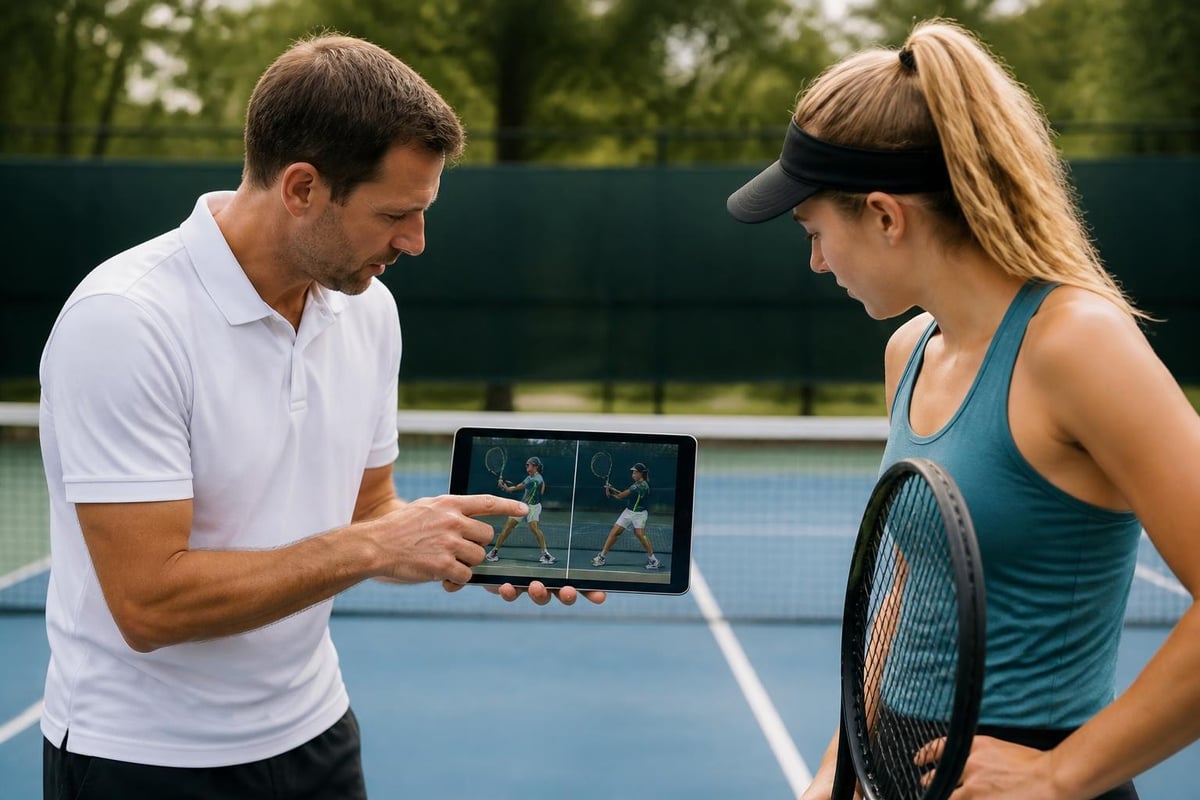
Research demonstrates that structured technical training dramatically accelerates skill acquisition. The tennis player who commits to evidence-based coaching methods can achieve results that seemed impossible through conventional practice alone. Scientific approaches to stroke correction analyze movement patterns frame-by-frame, identifying precise adjustment points that transform technique.
| Technical Element | Common Flaw | Performance Impact |
|---|---|---|
| Forehand Grip | Eastern/Continental instead of Semi-Western | 30-40% power loss |
| Backhand Preparation | Late unit turn | Reduced time and rushed shots |
| Serve Toss | Inconsistent placement | 50% first serve percentage drop |
| Footwork | Flat-footed positioning | Poor court coverage |
For players serious about technical mastery, specialized tennis coaching courses offer targeted instruction that addresses individual weaknesses with precision. Programs designed around systematic correction methods can transform strokes within days rather than months, providing the tennis player with immediate competitive advantages.

Mental Preparation Strategies for the Tennis Player
Physical technique alone cannot guarantee success. The tennis player must develop robust mental frameworks that support performance under pressure. Mental preparation affects tennis player performance in measurable ways, influencing concentration, decision-making, and emotional regulation during critical match moments.
Building Pre-Match Mental Routines
Elite competitors establish structured mental routines that prepare the tennis player for optimal performance. These psychological protocols create consistency and confidence:
- Visualization exercises rehearsing successful shot execution
- Breathing techniques managing physiological arousal
- Self-talk patterns reinforcing positive beliefs
- Focus triggers directing attention to controllable factors
- Energy management balancing intensity and relaxation
The benefits of mental preparation in tennis extend beyond match day. The tennis player who incorporates daily mental training develops resilience that transfers across all performance contexts.
In-Match Psychological Management
Competition exposes the tennis player to unique stressors-momentum shifts, opponent tactics, environmental conditions, and self-imposed expectations. Effective in-match mental strategies include:
- Point-by-point focus preventing score-watching anxiety
- Routine consistency maintaining composure between points
- Tactical flexibility adapting to evolving match situations
- Emotional reset protocols recovering from errors quickly
Learning how to get the mental edge in tennis requires deliberate practice of psychological skills. The tennis player benefits from treating mental preparation with the same rigor as technical training.

Physical Conditioning and Athletic Development
The modern tennis player requires exceptional physical capabilities. Court coverage demands explosive acceleration, matches lasting multiple hours test endurance limits, and repetitive stroke production requires muscular stamina and joint resilience.
Components of Tennis-Specific Fitness
Comprehensive athletic development for the tennis player encompasses multiple physical domains:
| Fitness Component | Training Focus | Tennis Application |
|---|---|---|
| Speed | First-step quickness, directional changes | Court coverage, net approaches |
| Endurance | Aerobic capacity, lactate threshold | Extended rallies, tournament play |
| Strength | Core stability, rotational power | Serve velocity, groundstroke power |
| Flexibility | Dynamic range of motion | Injury prevention, shot variety |
| Agility | Multi-directional movement | Defensive positioning, anticipation |
The tennis player training for competitive excellence must address each component systematically. Balanced development prevents physical limitations from constraining technical and tactical potential.
Injury Prevention and Recovery
Repetitive stress injuries plague the tennis player who neglects proper conditioning and recovery protocols. Common concerns include:
- Shoulder impingement from serving
- Tennis elbow from improper backhand mechanics
- Knee strain from poor movement patterns
- Lower back issues from rotational stress
Proactive injury prevention combines proper technique, appropriate strength training, adequate recovery time, and biomechanical assessment. The tennis player who maintains physical health sustains long-term development and competitive longevity.
Tactical Intelligence and Game Strategy
Beyond physical execution, the tennis player must develop strategic thinking that exploits opponent weaknesses while protecting personal vulnerabilities. Tactical sophistication separates players of similar technical and physical capabilities.
Pattern Recognition and Court Positioning
Advanced competitors understand probability-based positioning. The tennis player analyzes opponent tendencies-favorite shot selections, pressure responses, movement limitations-then constructs tactical patterns that maximize advantage:
- Baseline positioning optimizing court coverage versus offensive opportunity
- Shot selection balancing risk-reward based on score situations
- Pattern construction building points toward high-percentage finishes
- Defensive positioning neutralizing opponent strengths
- Transition tactics moving from defense to offense efficiently
The tennis player develops these strategic frameworks through match experience, video analysis, and coaching guidance. Tactical awareness transforms technical skills into competitive weapons.
Adapting to Different Playing Styles
Competition exposes the tennis player to diverse opponent profiles-aggressive baseliners, serve-volleyers, defensive counterpunchers, all-court players. Effective adaptation requires:
- Style identification recognizing opponent patterns early
- Tactical adjustment implementing appropriate counter-strategies
- Shot selection modification emphasizing effective patterns
- Tempo control managing rally pace and rhythm
The tennis player who demonstrates tactical flexibility gains competitive advantages against varied opposition. Strategic intelligence complements physical and technical capabilities.
The Role of Professional Coaching in Player Development
Self-directed practice has inherent limitations. The tennis player cannot objectively assess personal technique, identify subtle flaws, or design optimal progression pathways without expert guidance.
What Professional Coaching Provides
Qualified coaching delivers systematic development that recreational practice cannot replicate:
- Objective technical analysis identifying improvement opportunities
- Structured progression sequencing skill development logically
- Immediate feedback correcting errors before they become habits
- Tactical education teaching strategic frameworks
- Mental skills training developing psychological resilience
- Accountability systems maintaining consistent effort
The tennis player working with qualified instruction accelerates development significantly. Professional guidance prevents the common pitfall of reinforcing incorrect technique through repetitive practice.
Selecting the Right Coaching Approach
Not all coaching methodologies produce equivalent results. The tennis player should evaluate:
- Coaching credentials and competitive playing background
- Methodology philosophy and technical approach
- Success rate with similar student profiles
- Training structure and lesson organization
- Communication style and teaching personality
Modern coaching has evolved beyond traditional methods. The tennis player benefits from approaches grounded in biomechanical science, systematic progression, and measurable outcomes rather than generic instruction.
Technology and Modern Training Methods
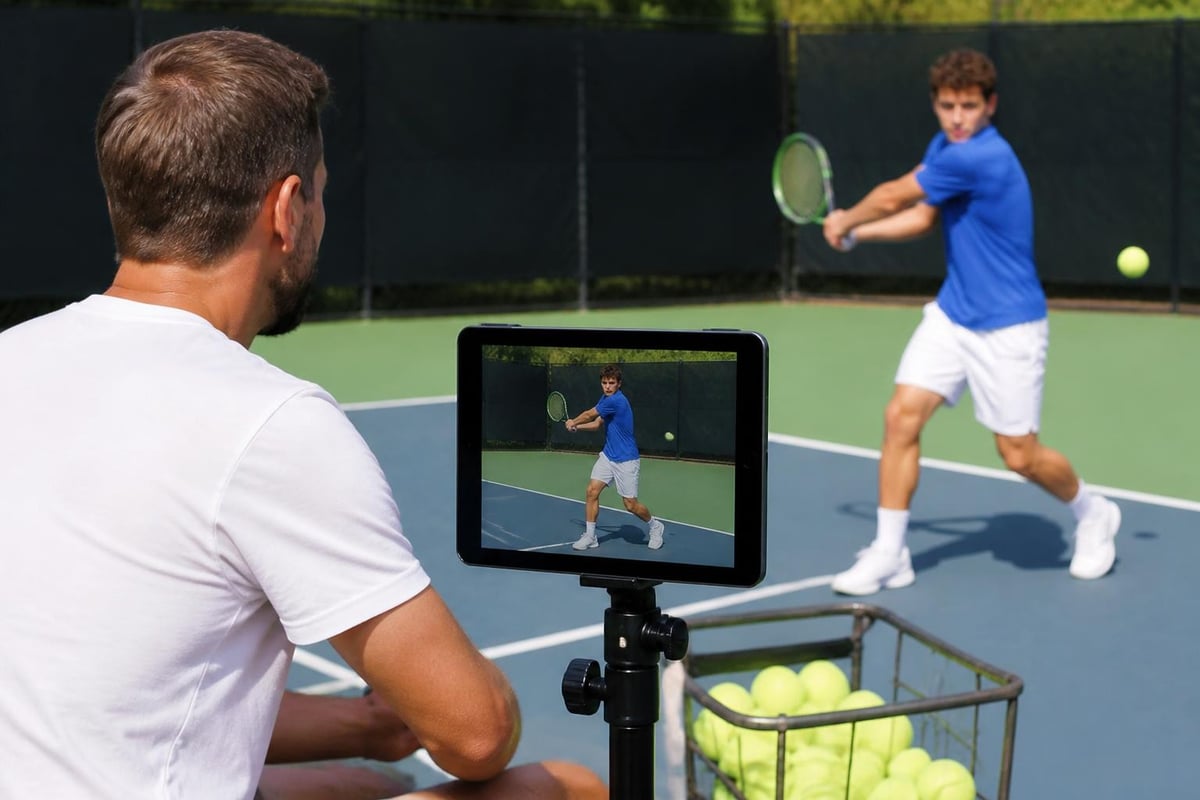
Contemporary training tools provide the tennis player with unprecedented development resources. Video analysis, wearable sensors, ball machines, and virtual reality systems enhance traditional practice methods.
Video Analysis and Biomechanical Assessment
Frame-by-frame video review reveals technical details invisible during real-time play. The tennis player gains insights into:
- Racquet path and swing plane deviations
- Contact point positioning relative to body
- Weight transfer timing and sequencing
- Follow-through completion and balance
Advanced systems track body positioning throughout stroke production, comparing the tennis player's mechanics against biomechanically optimal models. This objective feedback accelerates correction processes.
Emerging Training Technologies
Innovation continues transforming how the tennis player trains. Recent developments include:
| Technology | Application | Benefit |
|---|---|---|
| Wearable sensors | Motion tracking during practice | Real-time biomechanical feedback |
| AI analysis systems | Pattern recognition in match play | Tactical insight generation |
| Virtual reality | Simulated match situations | Mental preparation without court time |
| Smart ball machines | Programmable shot sequences | Consistent repetition of specific patterns |
Research exploring AI-driven tennis training systems demonstrates potential for accessible, personalized instruction. The tennis player of the future may benefit from automated analysis that rivals human coaching expertise.
Similarly, frameworks like TennisExpert for multimodal understanding promise enhanced analytical capabilities. These technological advances complement rather than replace quality human instruction.
Studies on virtual reality tennis training with real-time feedback show promising results for skill development. The tennis player can practice decision-making and shot selection in controlled environments that simulate match pressure.
Practice Structure and Skill Development
Effective practice distinguishes the improving tennis player from the stagnant one. Quality training requires intentional structure, specific objectives, and progressive challenge.
Designing Productive Practice Sessions
The tennis player maximizes improvement through carefully planned training:
- Warm-up protocols preparing body and mind for intensive work
- Technical drills isolating specific stroke elements
- Pattern practice integrating techniques into tactical sequences
- Situational training simulating match-realistic scenarios
- Conditioning work developing physical capabilities
- Cool-down routines facilitating recovery
Random hitting without structure wastes valuable court time. The tennis player benefits from purpose-driven practice that addresses specific development needs.
Balancing Repetition and Variety
Skill acquisition requires sufficient repetition to embed proper technique. However, the tennis player also needs varied practice that develops adaptability:
- Blocked practice repeating identical shots for technical refinement
- Random practice mixing shot types to build pattern recognition
- Pressure drills incorporating competitive elements and consequences
- Game-based training applying skills in match-like contexts
The optimal balance depends on skill level and development stage. The tennis player working with qualified coaching receives appropriate practice design matching current needs.
Competition and Performance Psychology
Match play presents psychological challenges distinct from practice environments. The tennis player must transfer training performance to competitive contexts where pressure, stakes, and opponent resistance create stress.
Managing Competitive Pressure
Tournament situations amplify mental demands. The tennis player develops pressure management through:
- Graduated exposure progressively increasing competitive intensity
- Process focus emphasizing controllable factors over outcomes
- Acceptance strategies managing anxiety without elimination attempts
- Performance routines maintaining consistency under stress
Mindset tips for the mental game provide practical frameworks the tennis player can implement immediately. Mental skills require practice just like physical techniques.
Learning from Competition Results
Each match provides development feedback. The tennis player extracts maximum value through:
- Objective performance review analyzing statistics and patterns
- Technical assessment identifying stroke breakdowns under pressure
- Tactical evaluation examining strategic decisions and effectiveness
- Mental reflection understanding psychological responses
- Adjustment planning creating specific improvement targets
Competition serves development when the tennis player approaches matches as learning opportunities rather than mere win-loss events.
Long-Term Development and Career Progression
The tennis player journey spans years or decades. Sustainable improvement requires patient progression, injury prevention, motivation maintenance, and realistic goal-setting.
Age-Appropriate Development Pathways
Junior players, adult improvers, and senior competitors face different development priorities. The tennis player benefits from age-specific approaches:
Junior Development emphasizes technical foundation, athletic development, competitive exposure, and academic balance. Early specialization risks burnout and overuse injuries.
Adult Improvement focuses on technical correction, tactical sophistication, fitness maintenance, and efficient practice. Time constraints demand targeted training approaches.
Senior Competition prioritizes injury prevention, technique optimization, strategic play, and enjoyment maintenance. Physical limitations require tactical compensation.
Setting Achievable Goals
The tennis player maintains motivation through realistic, measurable objectives:
- Process goals focusing on controllable actions
- Performance goals targeting specific technical or tactical standards
- Outcome goals identifying desired competitive results
Balanced goal-setting provides direction without creating destructive pressure. The tennis player celebrates progress while maintaining long-term perspective.
Developing excellence as a tennis player requires integration of technical precision, mental resilience, physical conditioning, and strategic intelligence. Success demands more than natural talent-it requires systematic training, expert guidance, and deliberate practice across multiple performance dimensions. Whether you're correcting ingrained technical flaws, building competitive mental strength, or seeking rapid skill development, Tennis Method Mili Split (MSM) offers scientifically-grounded coaching that produces measurable results, with proven methodologies that can transform your forehand and backhand strokes in just three days per stroke and coaching certification programs that reveal the teaching secrets behind accelerated player development.