Best Camera Angles for Tennis Video Analysis
A player sends you a forehand clip, and the first thing you notice is not the swing. It is the camera. The phone is too low, too close, and pointed from the side fence. You can see effort, but you cannot see cause. That is why camera angles for tennis video analysis matter so much. If the angle is wrong, even a skilled coach is forced to guess.
Good analysis starts with clear evidence. If you want to fix groundstroke problems quickly, the video must show spacing, timing, contact, balance, and racket path without distortion. The right angle does that. The wrong one hides the exact mistake that needs correcting.
Why camera angles decide the quality of feedback
Tennis technique happens fast. A late unit turn, an unstable base, or a contact point that drifts too close to the body can be missed in real time. Video solves that only if the camera position shows the full chain of movement.
Most players think any recording is better than none. That is not true. A bad recording creates false impressions. A forehand filmed from too far in front can make the swing path look cleaner than it is. A backhand filmed too tight can hide footwork errors completely. If the coach cannot see the feet, hips, shoulders, and contact in one frame, the analysis loses value.
For players who want fast correction and for coaches who want precise teaching points, the camera setup is not a minor detail. It is the foundation.
The best camera angles for tennis video analysis
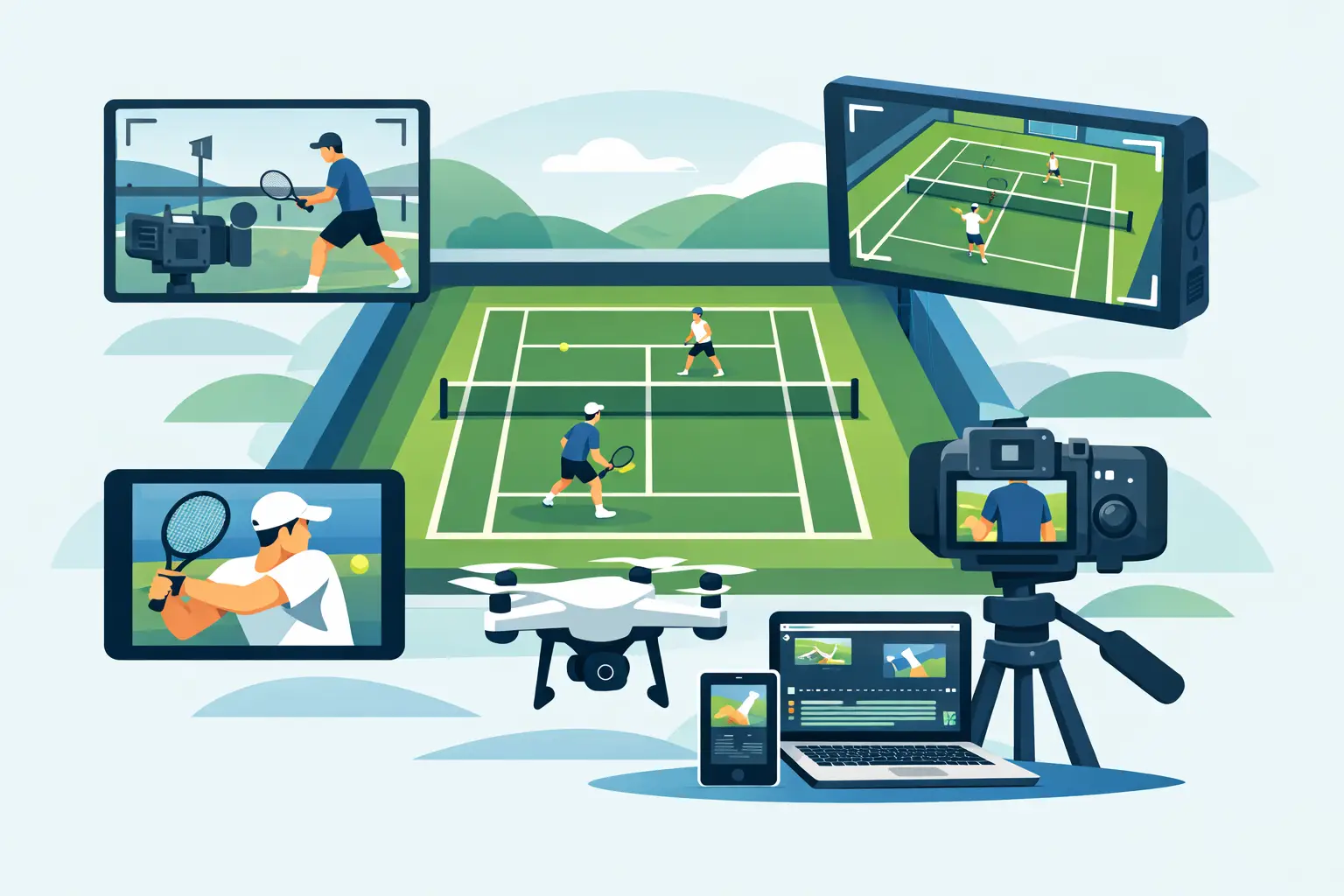
There is no single angle that shows everything. That is the first fact serious players need to accept. Tennis is a three-dimensional movement. One view may expose contact issues, while another reveals balance or rotation problems. The best results come from using two core angles.
The behind-the-player angle
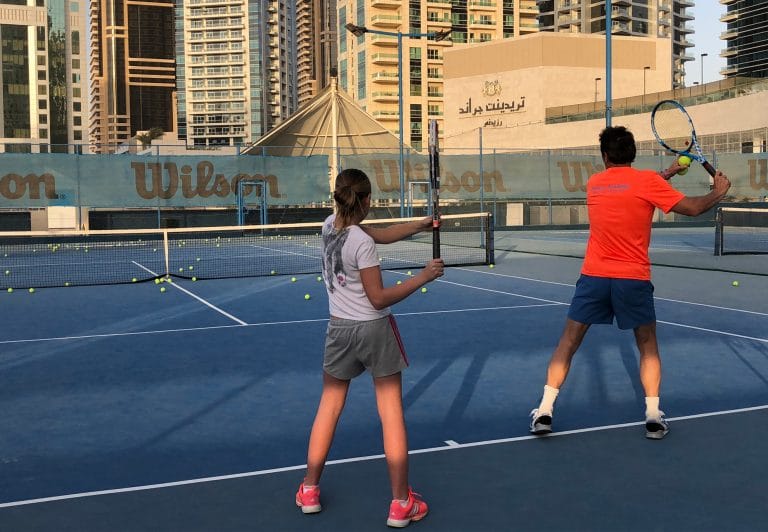
This is the most useful angle for analyzing groundstrokes in a practical coaching setting. Place the camera behind the baseline, centered with the middle of the court, high enough to capture the player from head to toe and the ball path into the strike zone.
This angle shows the true relationship between the player and the incoming ball. You can evaluate spacing, recovery, footwork patterns, contact height, and directional control. On the forehand, it becomes much easier to see whether the player is crowding the ball, hitting off the back foot, or losing the hitting structure through contact. On the two-handed backhand, you can spot alignment issues early because the setup is visible from the start.
For many remote lessons, this is the first angle worth requesting. It gives a coach the clearest view of what the player is actually doing under realistic rally conditions.
The side angle
The side angle is the second essential view. Position the camera near the sideline, roughly in line with the contact area, far enough away to include the full stroke and recovery. This angle is excellent for evaluating stance, weight transfer, posture, swing shape, and contact position relative to the body.
If a player keeps making solid contact in mini tennis but breaks down at full speed, the side view often explains why. You can see whether contact is too late, whether the torso lifts during the swing, or whether the player falls backward instead of moving through the shot. These details matter because ball quality is usually the result of body organization, not just racket action.
A side view also helps separate style from error. Not every modern forehand looks the same, and not every open stance is a problem. What matters is whether the body supports the stroke. This angle helps answer that fast.
Which angle is best for forehands and backhands?
If you can record only one angle, use the view from behind the player for both forehands and backhands. It gives the most complete information for rally analysis. It is especially strong for diagnosing spacing errors, footwork delays, and directional control issues.
If the issue seems tied to timing, posture, or contact point, add the side angle. That combination removes most of the guesswork. A coach can see both what happened and why it happened.
For one-handed backhands, the side view becomes even more important because contact location and extension are easier to judge there. For two-handed backhands, the behind view is often enough to expose setup and strike alignment, but the side view still sharpens the diagnosis.
Common recording mistakes that ruin tennis analysis
Most bad footage fails for simple reasons. The camera is too low, so the net or court surface blocks the feet. Or it is too close, so part of the swing disappears out of frame. Sometimes it is placed at an angle that is neither true side nor true rear view, which creates distortion without giving useful information.
Another common problem is filming only one or two balls. That is not enough. A player can fake one clean stroke. Patterns show up over repetitions. Ten to fifteen shots from the same side usually tell the truth.
Zoom is another trap. Digital zoom reduces clarity and often crops out the body. Keep the frame wide enough to include the full player, the bounce, and the recovery. If the player moves outside the frame, the setup failed.
Finally, many players record in poor lighting or with the camera shaking by hand. Use a tripod or stable fence mount. Stable video is not a luxury. It is required if you want precise feedback.
How high and how far should the camera be?
For the behind view, a height around chest to head level usually works best. Too low exaggerates upward motion and hides the feet. Too high flattens depth and can make spacing harder to judge. Centered behind the baseline is the key. If the camera sits off to one side, the coach may misread alignment and movement patterns.
For the side view, keep enough distance to see preparation, contact, and finish without cutting off the player. A common mistake is standing too close because the player wants a big image. Big is not the goal. Useful is the goal.
It depends somewhat on the court and the device. A phone with a wide lens can sit closer. A tighter lens needs more distance. But the rule stays the same: full body, clear contact zone, and no missing frames.
What to record if you want fast technical correction
If your goal is serious improvement, not casual posting, record crosscourt forehands and backhands first. These patterns reveal the most repeatable mechanics. Neutral rally balls are more useful than random points because they show the player’s true stroke structure without the chaos of competition.
Then record a few balls under pressure. That could be live rally pace, directional changes, or movement into the shot. Technique that survives pressure is real technique. Technique that appears only in easy feeds is incomplete.
This is where a method-driven coach gains an edge. With the right angles, technical faults stop looking mysterious. They become visible, measurable, and fixable. That is how fast improvement happens.
Camera angles for tennis video analysis in remote coaching
Remote coaching works only when the footage is coachable. That sounds obvious, but many players still expect detailed answers from unusable clips. A serious online lesson should feel almost like being on court because the camera positions give the coach the same evidence needed to teach with precision.
That is why structured filming matters. One behind angle. One side angle. Enough repetitions to reveal a pattern. Stable image. Full body in frame. When those standards are met, video analysis becomes direct and decisive.
For coaches, this also creates consistency. You can compare sessions, track progress, and verify whether the correction actually held up over time. For players, it removes confusion. They stop chasing random tips and start seeing exactly what changes the stroke.
When you might need a third angle
Two angles are enough for most forehand and backhand analysis. Still, there are cases where a third view helps. If the player has unusual ball toss habits on serves, extreme lateral movement issues, or a contact problem that appears only on wide balls, a front-side variation can add useful context.
But this is where discipline matters. More angles do not always mean better analysis. Too many random clips can waste time and blur the priority. Start with the two essential views, then add another only if a specific question remains unanswered.
If you want a tennis video to produce real answers, treat the camera like part of the coaching process, not an afterthought. The right angle does not just make the footage look better. It exposes the exact reason the stroke breaks down, and that is where real progress begins.