
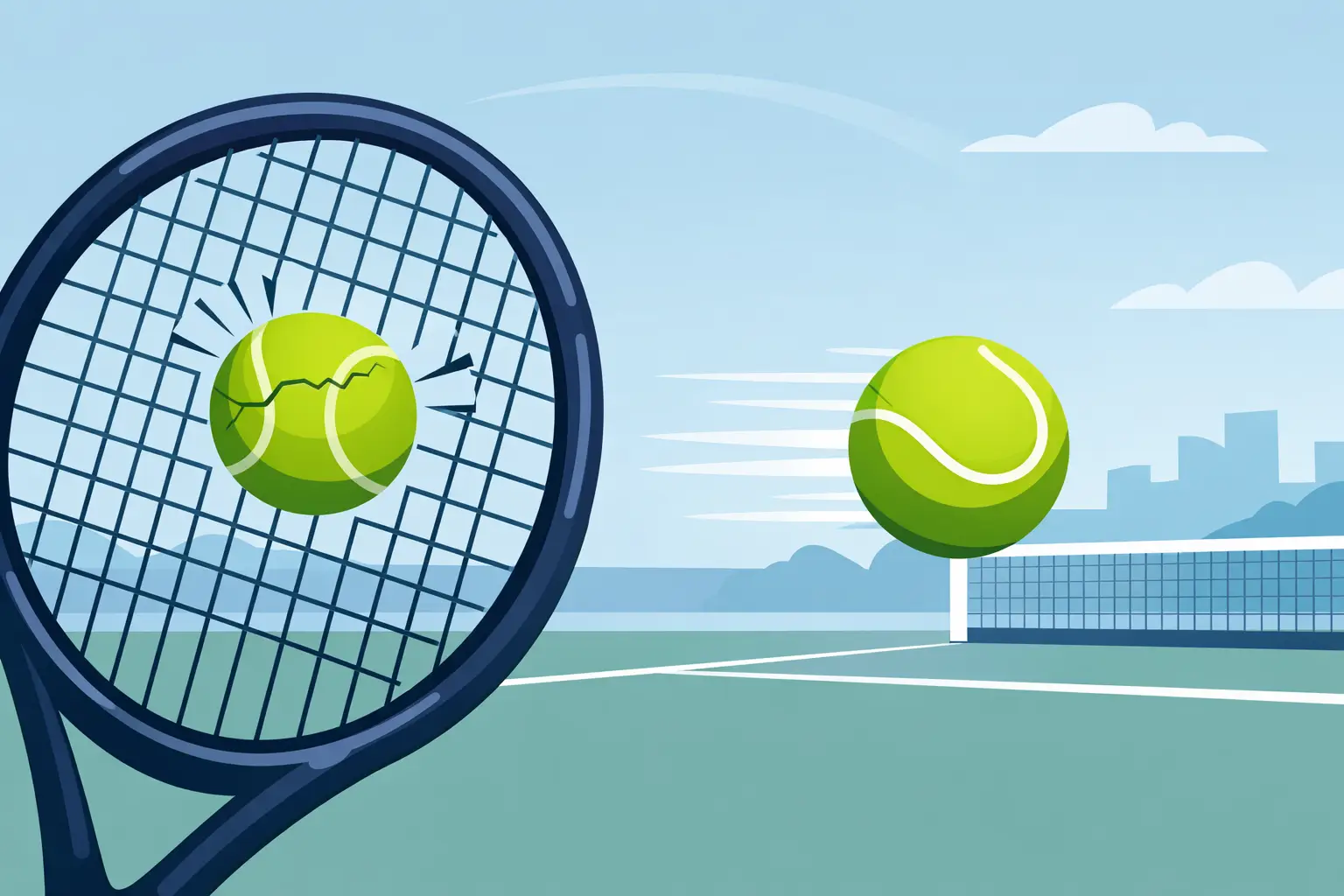
You do not frame a forehand or backhand because you are unlucky. You frame it because something in your movement pattern is late, crowded, or unstable at contact. If you want to stop framing the tennis ball, you need to stop treating the miss as random and start treating it as a technical fault with a clear cause.
That matters because framing is not a small mistake. It destroys rhythm, confidence, and trust in your stroke. One bad frame can make a player slow down the next swing, guide the racket, or change the contact point without realizing it. Then the real problem gets buried under compensation.
Why players frame the tennis ball
Most players assume the frame happens at the point of contact. It usually starts earlier. The racket face only exposes the mistake. The source is almost always in one of three places: spacing, timing, or swing structure.
Poor spacing is the biggest one. When the ball gets too close to your body, the racket cannot travel cleanly through the hitting zone. The player feels jammed, the arm folds, and the frame arrives first. When the ball is too far away, the player reaches, loses shape, and clips the edge for a different reason. In both cases, the contact point is compromised before the swing is finished.
Timing is next. Late preparation forces rushed decisions. The player sees the ball, reacts late, then tries to save the shot with the hand. That almost never works under speed. Clean contact depends on early organization. If your body is still deciding while the ball is entering the strike zone, the frame is already on the way.
Then there is swing structure. Many players swing with a path that is inconsistent from ball to ball. The racket head drops differently, the wrist changes shape, or the elbow disconnects from the intended line of the shot. That creates a moving contact point. A moving contact point is unreliable contact.
Stop framing the tennis ball by fixing the real fault
The fastest improvement comes when you stop chasing symptoms. Do not tell yourself to “watch the ball better” and expect a lasting result. Vision matters, but it is not the full answer. Players can stare at the ball and still frame it if their feet, spacing, and swing sequence are wrong.
Start with your distance from the ball. On groundstrokes, clean contact needs room. Not excessive reach and not crowding. Real room. When your spacing is correct, your arm can extend naturally through contact and the racket face can meet the center of the strings instead of the edge. That is why advanced players seem calm. They do not have better luck. They arrive in the right place sooner.
Footwork is what creates that place. Small adjustment steps are not optional. They are the difference between balanced contact and emergency contact. Players who frame often move to the general area, then stop their feet too early. The ball keeps traveling, but their body does not keep adjusting. One more small step often changes everything.
Preparation also has to happen earlier than most players think. The turn, unit setup, and initial racket position should begin as the ball leaves the opponent’s racket, not halfway through the flight. Early preparation buys time. Time creates clean spacing. Clean spacing creates clean contact.
What framing usually looks like on the forehand
On the forehand, the most common frame comes from crowding the ball and letting the hitting arm collapse. The player starts with decent intent, but the spacing disappears at the last second. Instead of striking slightly in front with extension, the contact gets dragged too close to the body. The edge of the racket takes over.
Another common issue is an unstable racket face caused by unnecessary wrist manipulation. Players try to add shape, spin, or control with the hand instead of building a repeatable path with the body and arm structure. Under pressure, that extra hand action makes the racket face unpredictable. Unpredictable racket face means unpredictable contact.
There is also the late forehand. This player recognizes the ball but delays the turn or the loading phase. At that point, the swing becomes rushed and steep. The result is often a frame on the upper part of the racket, especially on faster incoming balls.
What framing usually looks like on the backhand
On the backhand, framing often comes from poor alignment and a contact point that drifts too close to the body. With two hands, that can feel strong for a moment, but it jams the stroke quickly. With one hand, it is even less forgiving. The racket face loses stability and the margin disappears.
Players also frame the backhand when they pull off the shot too early. The shoulders open, the head lifts, and the strike zone changes. The ball is still there, but the body has already left. That is not a focus problem. It is a sequencing problem.
High balls expose backhand flaws fast. If the player does not organize the body and racket path early, the contact rises into an uncomfortable zone and the frame becomes common. Good players do not simply endure that ball better. They prepare earlier and shape the spacing sooner.
The correction is simpler than most players think
If your goal is to stop framing the tennis ball, stop making ten changes at once. One clear correction done consistently beats a pile of swing thoughts.
First, establish your ideal contact distance. You should feel that the ball is far enough from the torso to let the racket travel freely, but close enough to stay connected and balanced. That feeling must become automatic. If it is not automatic, your misses will keep appearing under pace.
Second, keep the feet alive all the way into contact. Do not move, plant, and hope. Adjust, adjust again, then hit. That last adjustment step is often the difference between the sweet spot and the frame.
Third, simplify the racket path. A repeatable swing is a reliable swing. Remove extra hand action. Remove last-second steering. Build a path you can trust at slow speed, then at rally speed, then under pressure.
This is where players make fast progress when coached correctly. They do not need vague advice. They need the exact pattern identified and replaced. That is why a precise system beats endless trial and error.
Why traditional advice often fails
A lot of players hear the same lines for years: move your feet, watch the ball, stay relaxed. None of that is false. It is just incomplete. General advice does not solve specific contact errors.
If a player frames because the ball gets too close on the forehand, telling them to relax does not correct spacing. If a coach sees a late backhand but only says “prepare early,” that still may not fix the exact body sequence causing the delay. Results come from identifying the actual breakdown, not repeating broad reminders.
That is one reason technical issues can linger far longer than they should. The player works hard, but the correction is too vague to produce change. A scientific method changes that because it isolates the fault and builds the fix in a clear sequence.
Coaches and players need measurable change
Serious players want reliability. Coaches want a method that holds up across different ages, levels, and stroke problems. Framing the ball is a perfect example of where measurable correction matters. You can see it immediately in cleaner contact, more stable rally tolerance, and more confidence on faster balls.
At Mili’s Split Method, this is exactly the kind of problem that gets solved quickly because the teaching is built around precise stroke correction, not guesswork. When the cause is identified correctly, the change does not take forever. That is the standard serious players and serious coaches should expect.
The fastest way to rebuild clean contact
Start on manageable rally balls and rebuild the strike zone with discipline. Focus on early setup, correct distance from the ball, and a stable path through contact. Then increase pace only after the sweet spot becomes repeatable. If you rush the progression, you keep the old problem alive.
Do not judge improvement by one perfect shot. Judge it by how often you make the same clean contact in a row. That is the real test. Tennis is not about occasional correctness. It is about repeatable correctness.
And if you keep framing the same ball, stop blaming touch, confidence, or timing in the abstract. There is a reason. Once you identify it, the miss stops feeling mysterious and starts becoming fixable. That is when confidence comes back – not from hope, but from clean contact you can trust.