

The tennis coaching profession continues to evolve, and becoming a USTA coach represents a commitment to excellence and professional development in the sport. Whether you're an aspiring coach looking to launch your career or an experienced instructor seeking to enhance your credentials, understanding the USTA coaching framework is essential for success in today's competitive tennis landscape. The United States Tennis Association has established comprehensive programs to support coaches at every level, providing pathways for growth, accreditation, and ongoing education that align with the highest standards in tennis instruction.
Understanding the USTA Coaching Framework
The role of a USTA coach extends far beyond simply teaching groundstrokes and serving techniques. Modern tennis coaching requires a multifaceted approach that encompasses technical expertise, pedagogical skills, business acumen, and a deep understanding of player development across all ages and abilities.
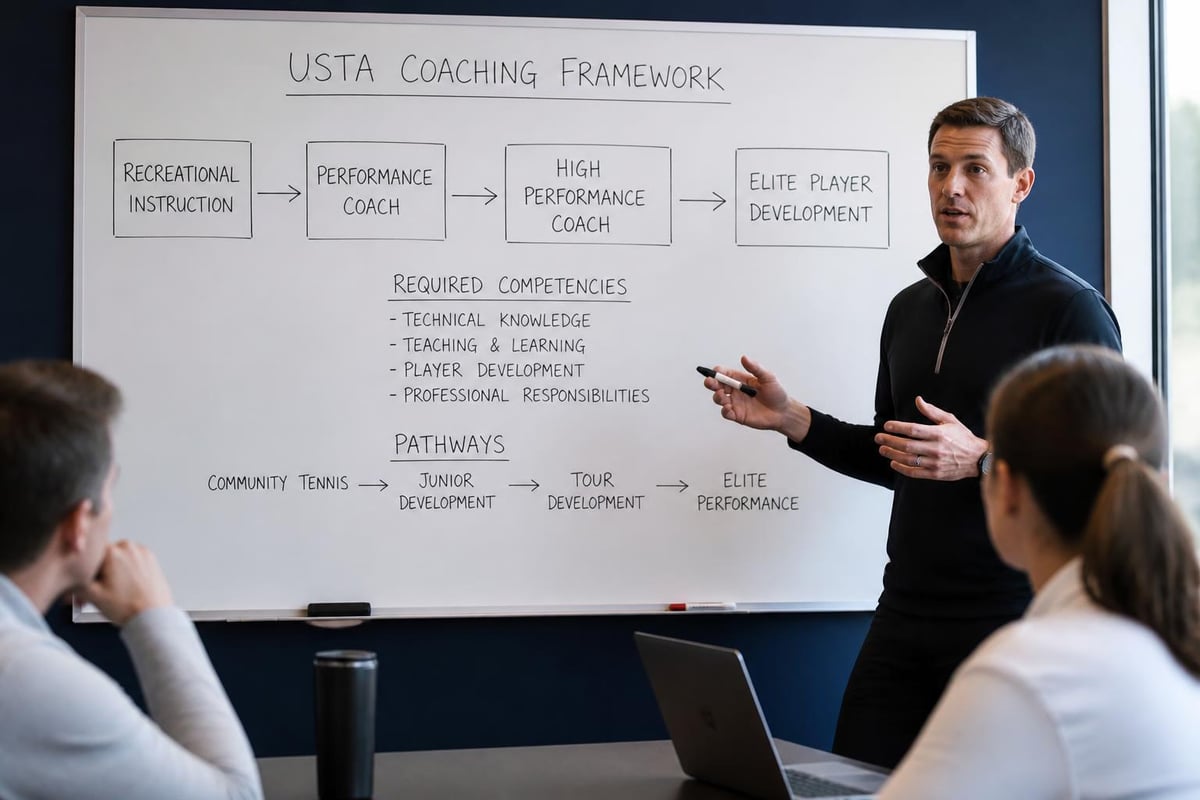
The USTA Coaching Accreditation Program recognizes various coaching certification organizations for their performance, integrity, and quality. This accreditation system strengthens standards across the U.S. tennis industry by ensuring coaches receive training that meets rigorous professional benchmarks.
Core Competencies for USTA Coaches
Every USTA coach must develop proficiency across several critical domains:
- Technical Knowledge: Mastery of stroke mechanics, tactics, and game strategy
- Teaching Methodology: Ability to communicate effectively and adapt instruction to different learning styles
- Player Development: Understanding age-appropriate training and long-term athletic development
- Safety and Risk Management: Knowledge of injury prevention and emergency protocols
- Professional Ethics: Commitment to integrity, safeguarding, and best practices
The journey to becoming an effective USTA coach involves continuous learning and refinement of these competencies throughout your career.
Certification Pathways and Requirements
Becoming a certified USTA coach involves navigating several potential pathways, each designed to meet different career objectives and coaching contexts. The certification landscape has evolved significantly, particularly with recent initiatives to support and elevate the coaching profession.
USTA Coaching Inc. Initiative
In a transformative move for the profession, the USTA launched USTA Coaching, Inc. to create a comprehensive platform designed to transform the tennis coaching experience. This entity provides enhanced support for coaches nationwide, offering resources that address both technical development and business growth.
| Certification Level | Minimum Age | Experience Required | Course Duration | Renewal Period |
|---|---|---|---|---|
| Recreational Coach | 18 years | None | 2-3 days | 3 years |
| Competitive Coach | 18 years | 1 year coaching | 4-5 days | 3 years |
| Professional 1 | 21 years | 2 years coaching | 5-7 days | 4 years |
| Professional 2 | 23 years | 5 years coaching | Advanced course | 4 years |
The specific requirements may vary based on the certifying organization recognized by the USTA Coaching Accreditation Program. Prospective coaches should research which pathway aligns best with their career goals and current experience level.
Alternative Coaching Education Approaches
While USTA certification provides valuable credentials, innovative coaching methodologies have emerged that complement traditional certification paths. The Tennis Method Mili Split (MSM) represents a scientific approach to tennis instruction that has gained recognition since 2005. This methodology focuses on rapid technique correction through its distinctive Split Method, which addresses forehand and backhand mechanics with unprecedented efficiency.
For coaches seeking to differentiate themselves in a crowded market, exploring specialized tennis coach certification programs can provide unique teaching frameworks that deliver exceptional results. The MSM approach, founded by Mili Veljkovic, demonstrates how systematic methodology can achieve technique corrections in remarkably short timeframes, even through online coaching platforms.

Building Your Coaching Business as a USTA Coach
Certification represents just the beginning of your professional journey. Successful USTA coaches understand that building a sustainable coaching business requires strategic planning, marketing expertise, and exceptional service delivery.
Establishing Your Coaching Identity
Your unique coaching identity differentiates you from competitors and attracts your ideal clients. Consider these essential elements:
- Specialization Focus: Determine whether you'll concentrate on juniors, adults, competitive players, or recreational enthusiasts
- Teaching Philosophy: Articulate your approach to player development and technical instruction
- Value Proposition: Clearly communicate what makes your coaching services distinctive
- Professional Branding: Develop consistent messaging across your website, social media, and marketing materials
Many coaches struggle with establishing premium pricing for their services. Understanding why tennis lessons are expensive helps you confidently communicate your value to potential clients.
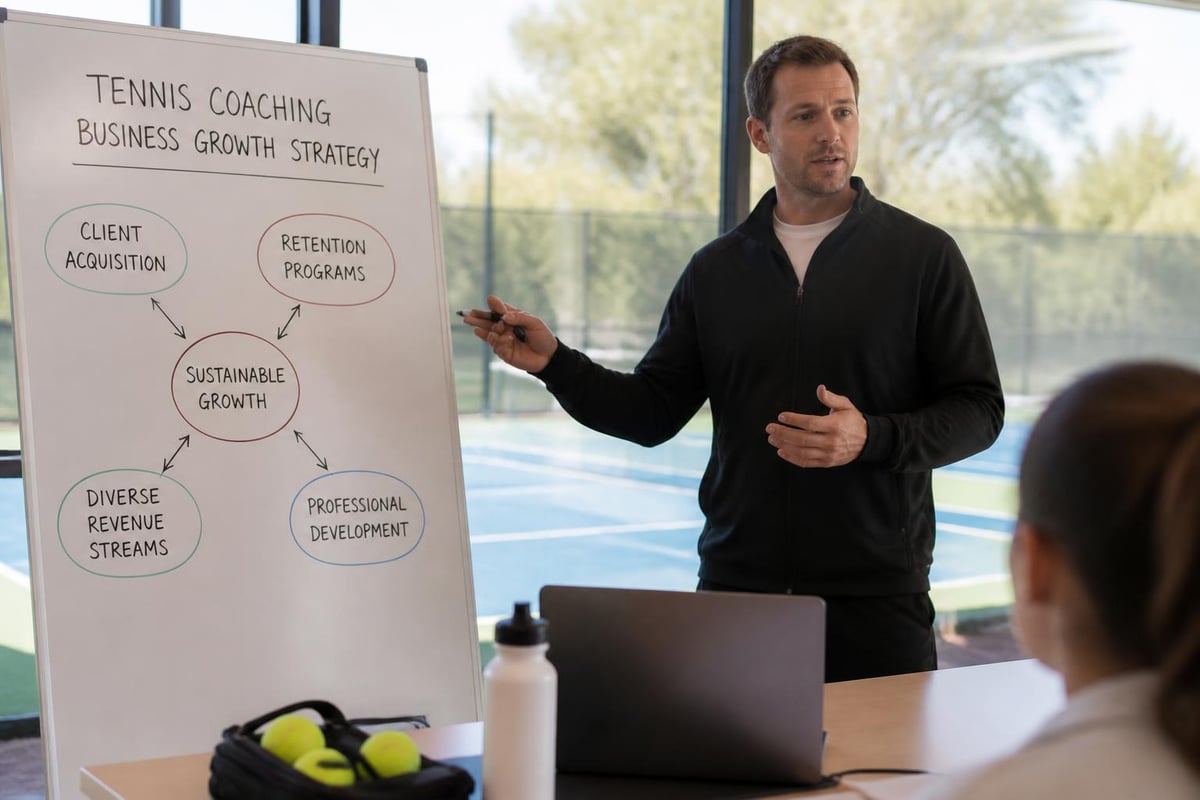
Revenue Streams and Business Models
Diversifying your income sources creates financial stability and growth opportunities. Successful USTA coaches typically develop multiple revenue streams:
- Private Lessons: One-on-one instruction commanding premium rates
- Group Clinics: Cost-effective training for multiple students simultaneously
- Junior Development Programs: Structured pathways for young competitive players
- Adult Social Tennis: Programs combining instruction with recreational play
- Online Coaching: Virtual lessons and video analysis services
- Coach Training: Mentoring aspiring coaches or teaching specialized methodologies
The flexibility of modern coaching allows professionals to create business models aligned with their lifestyle preferences and income goals. Questions about how much private lessons cost frequently arise, and coaches must establish pricing that reflects their expertise, local market conditions, and the value they deliver.
Technical Excellence and Teaching Methodology
The most successful USTA coaches combine deep technical knowledge with exceptional teaching abilities. Understanding stroke mechanics is necessary but insufficient-you must translate that knowledge into progressive learning sequences that produce results.
Modern Stroke Production Techniques
Contemporary tennis emphasizes specific technical elements that have evolved with equipment advances and athletic development:
Forehand Mechanics: Modern forehands utilize semi-western grips, closed stance options, and sophisticated kinetic chain sequencing. Coaches must understand how to hit semi-western forehand techniques while adapting instruction to individual biomechanics.
Backhand Development: Two-handed backhands dominate modern tennis, requiring coaches to master teaching tennis backhand fundamentals alongside one-handed variants for players who prefer that style.
Spin Generation: Understanding how to brush the tennis ball and generate topspin represents a fundamental skill for competitive play. Coaches must demonstrate and teach the specific contact points, swing paths, and wrist actions that create heavy spin.
Progressive Skill Development Systems
Effective USTA coaches implement structured progression systems that build skills systematically:
- Assessment: Evaluate current technical abilities and identify limiting factors
- Prioritization: Determine which technical changes will produce the greatest improvement
- Simplification: Break complex movements into manageable learning chunks
- Practice Design: Create drills that isolate and reinforce new movement patterns
- Integration: Combine technical elements into fluid, automatic execution
- Competition Application: Transfer practice skills to match play situations
This systematic approach ensures players develop sustainable improvements rather than temporary fixes that deteriorate under pressure.
Professional Development and Continuing Education
The coaching profession demands ongoing learning to remain current with evolving techniques, sports science insights, and pedagogical innovations. USTA coaches who commit to continuous development invariably achieve superior results with their students.
Resources for Coaching Excellence
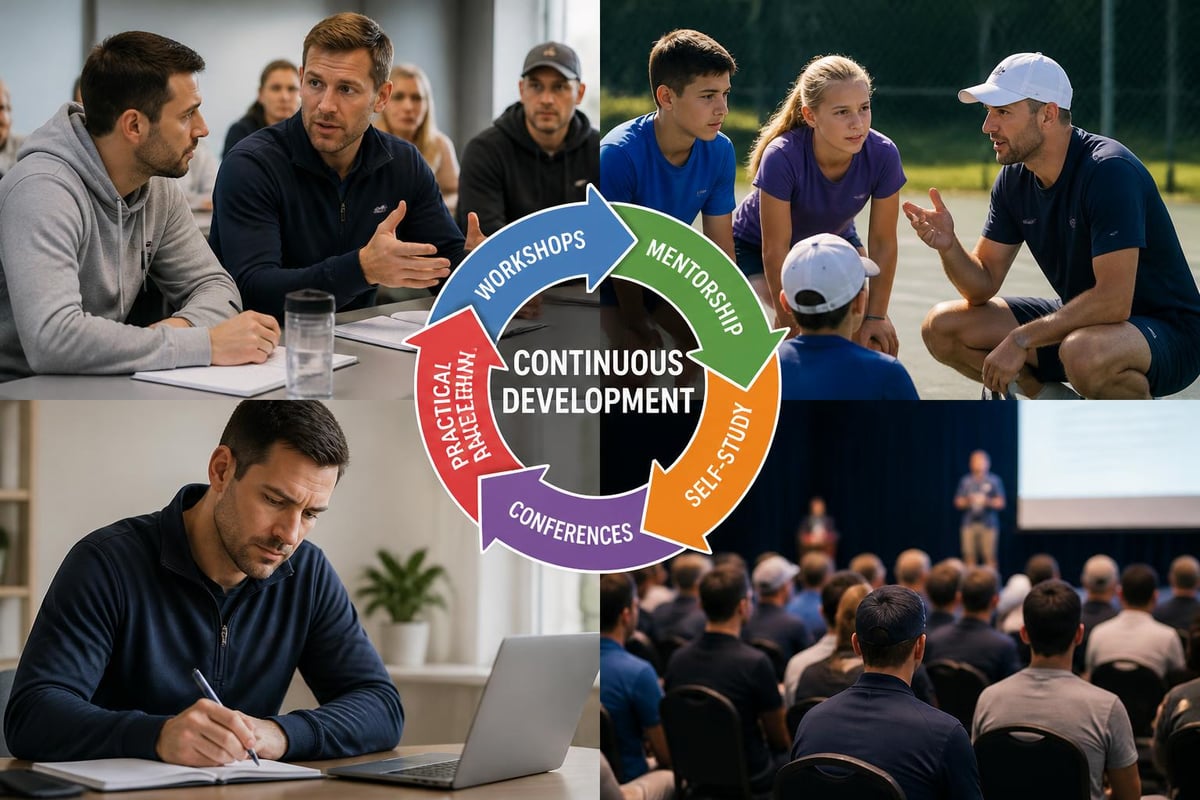
The USTA provides extensive resources for coaches seeking to enhance their skills and grow their careers. These resources include workshops, webinars, educational materials, and networking opportunities that connect coaches with peers and mentors.
| Development Activity | Frequency | Time Investment | Career Impact |
|---|---|---|---|
| Certification Renewal | Every 3-4 years | 20-40 hours | Required for credentials |
| Specialized Workshops | Quarterly | 4-8 hours each | High skill enhancement |
| Mentorship Programs | Ongoing | 2-5 hours monthly | Accelerated growth |
| Self-Study (books/videos) | Weekly | 3-5 hours | Cumulative expertise |
| Conference Attendance | Annually | 2-4 days | Networking and trends |
Investing time in professional development directly correlates with coaching effectiveness and business success. The most accomplished coaches view education as a career-long commitment rather than a one-time certification requirement.
Specialized Teaching Methodologies
Beyond standard USTA coach training, exploring specialized methodologies can dramatically enhance your teaching effectiveness. Innovative systems that focus on rapid technical correction offer valuable frameworks for addressing stubborn technical flaws.
For instance, the Split Method developed by Mili Veljkovic demonstrates how systematic biomechanical analysis combined with specific corrective protocols can achieve forehand and backhand corrections in just three days per stroke. This efficiency challenges conventional assumptions about the timeline required for meaningful technical change.
Coaches interested in standing out from competitors often pursue specialized certification programs that teach these advanced methodologies. Understanding multiple teaching frameworks allows you to select the most effective approach for each student's unique needs and learning style.
Player-Centered Coaching Philosophy
The transition from technical instructor to transformational USTA coach requires adopting a genuinely player-centered philosophy. This approach prioritizes the individual needs, goals, and learning preferences of each student over rigid teaching templates.
Individualized Instruction Approaches
Every player brings unique physical attributes, learning styles, psychological characteristics, and goals to the coaching relationship. Effective USTA coaches recognize these differences and customize their approach accordingly:
- Visual Learners: Benefit from demonstrations, video analysis, and spatial references
- Kinesthetic Learners: Require hands-on positioning, guided movements, and physical metaphors
- Analytical Learners: Respond to biomechanical explanations, data, and logical progressions
- Intuitive Learners: Develop best through experimentation, feel-based cues, and creative exploration
Adapting your communication style and practice design to match individual learning preferences accelerates progress and enhances student satisfaction.
Goal Alignment and Expectation Management
Successful coaching relationships begin with clear communication about objectives and realistic timelines. USTA coaches must facilitate honest conversations about:
- Current ability level: Objective assessment of existing skills and limitations
- Desired outcomes: Specific, measurable goals the player wants to achieve
- Time commitment: Realistic practice frequency required for meaningful progress
- Investment expectations: Financial and temporal resources needed to reach goals
- Progress indicators: How improvement will be measured and celebrated
This alignment process prevents misunderstandings and creates accountability for both coach and player. When students understand the pathway to improvement, they demonstrate greater commitment and persistence through challenging technical changes.
Marketing and Client Acquisition Strategies
Even the most technically proficient USTA coach struggles without students. Developing effective marketing strategies ensures a steady stream of clients and sustainable business growth.
Digital Marketing Essentials
Modern coaching businesses require strong online presence across multiple platforms:
- Professional Website: Showcasing credentials, teaching philosophy, testimonials, and booking options
- Social Media Engagement: Regular content demonstrating expertise and connecting with local tennis community
- Video Content: Short instructional clips, student success stories, and coaching insights
- Email Marketing: Nurturing relationships with current and prospective clients through valuable content
- Local SEO: Optimizing for searches like "tennis coach near me" or "USTA certified instructor [city]"
Consistency matters more than perfection in digital marketing. Regular, authentic content builds trust and positions you as the go-to coaching resource in your market.
Referral Systems and Community Building
Word-of-mouth referrals remain the most powerful marketing channel for coaching businesses. USTA coaches who create exceptional experiences naturally generate referrals through:
- Outstanding Results: Students who improve rapidly become enthusiastic ambassadors
- Personal Connection: Building genuine relationships beyond the court creates loyalty
- Community Events: Hosting clinics, tournaments, or social mixers expands your network
- Strategic Partnerships: Collaborating with local clubs, schools, and sports facilities increases visibility
- Formal Referral Programs: Incentivizing current clients to recommend your services
Building a coaching business based on referrals creates sustainable growth with lower marketing costs and higher-quality client relationships.
Navigating Common Coaching Challenges
Every USTA coach encounters obstacles that test their technical knowledge, patience, and problem-solving abilities. Developing strategies for common challenges distinguishes effective coaches from struggling instructors.
Technical Plateau Management
Players frequently experience frustrating plateaus where progress stalls despite consistent practice. Skilled coaches address these situations through:
- Fresh Perspective: Analyzing technique from different angles to identify subtle limitations
- Periodization: Temporarily shifting focus to different skills while allowing primary techniques to consolidate
- Equipment Assessment: Evaluating whether racket specifications match current game development
- Mental Skills Integration: Addressing psychological barriers that may limit physical performance
- Cross-Training Activities: Incorporating fitness, agility, or coordination work to enhance on-court movement
Sometimes technical plateaus indicate readiness for advanced methodologies that can identify and correct subtle biomechanical inefficiencies standard coaching approaches miss.
Managing Diverse Skill Levels
USTA coaches working with group programs must accommodate students at varying ability levels. Effective differentiation strategies include:
| Challenge | Solution Approach | Implementation Example |
|---|---|---|
| Mixed abilities in groups | Tiered drill variations | Same pattern with different pace/spin requirements |
| Uneven rally partners | Rotating partnerships | Structured rotation ensuring varied matchups |
| Differential learning speeds | Individualized modifications | Adjusted ball feeds or court positioning |
| Motivation differences | Choice within structure | Optional challenge progressions |
Creating inclusive environments where all students feel challenged yet capable requires thoughtful program design and adaptive teaching.
The Business Side of Coaching
Technical excellence alone doesn't guarantee coaching success. USTA coaches must develop business acumen to create sustainable, profitable enterprises.
Financial Planning and Pricing Strategy
Establishing appropriate pricing requires understanding your market, costs, and value proposition. Considerations include:
- Market Research: Analyzing competitor pricing and local economic conditions
- Cost Analysis: Calculating facility fees, equipment, insurance, taxes, and administrative expenses
- Value-Based Pricing: Setting rates based on outcomes delivered rather than time invested
- Tiered Service Options: Offering packages at multiple price points for different client segments
- Seasonal Adjustments: Modifying pricing for peak demand periods or slower seasons
Many coaches undervalue their services, particularly when starting out. Recognizing that specialized expertise commands premium rates allows you to build a business that rewards your investment in education and development.
Administrative Systems and Efficiency
Successful coaching businesses implement systems that minimize administrative burden and maximize coaching time:
- Automated Scheduling: Online booking systems reduce communication overhead
- Payment Processing: Digital payment solutions ensure consistent cash flow
- Client Management Software: Centralized records tracking progress, attendance, and communication
- Lesson Planning Templates: Reusable structures accelerating preparation time
- Communication Protocols: Clear policies for cancellations, makeups, and parent updates
Investing in systems creates scalability, allowing you to serve more students without proportional increases in administrative time.
Ethics and Professional Conduct
USTA coaches bear significant responsibility for student safety, development, and wellbeing. Maintaining the highest ethical standards protects both students and your professional reputation.
Safeguarding and Safety Protocols
Every USTA coach must prioritize student safety through:
- Background Screening: Completing required background checks and maintaining current status
- SafeSport Training: Understanding abuse prevention, recognition, and reporting obligations
- Emergency Preparedness: Maintaining current CPR/AED certification and emergency action plans
- Appropriate Boundaries: Establishing professional relationships that protect vulnerable populations
- Risk Assessment: Identifying and mitigating potential hazards in training environments
These protocols aren't bureaucratic obstacles but essential protections ensuring the coaching profession maintains public trust.
Professional Relationships and Communication
Ethical USTA coaches navigate complex relational dynamics with integrity:
- Parent Communication: Providing honest feedback while maintaining appropriate boundaries with families
- Realistic Expectations: Avoiding overpromising results or guaranteeing outcomes beyond your control
- Confidentiality: Respecting student privacy and avoiding inappropriate disclosures
- Continuing Competence: Referring students to specialists when issues exceed your expertise
- Professional Courtesy: Treating fellow coaches with respect and avoiding disparagement
Building a reputation for integrity creates long-term success that superficial marketing tactics cannot match.
Becoming a successful USTA coach requires dedication to technical mastery, teaching excellence, business development, and ethical practice. The coaching profession offers tremendous rewards for those committed to continuous improvement and student-centered service. If you're ready to elevate your coaching effectiveness through proven scientific methodology, Tennis Method Mili Split (MSM) offers specialized training that can transform your teaching results. Since 2005, the Split Method has helped coaches worldwide achieve remarkable technical corrections with their students, including guaranteed forehand and backhand improvements in just three days per stroke. Discover how this innovative approach can set you apart in the competitive coaching landscape.