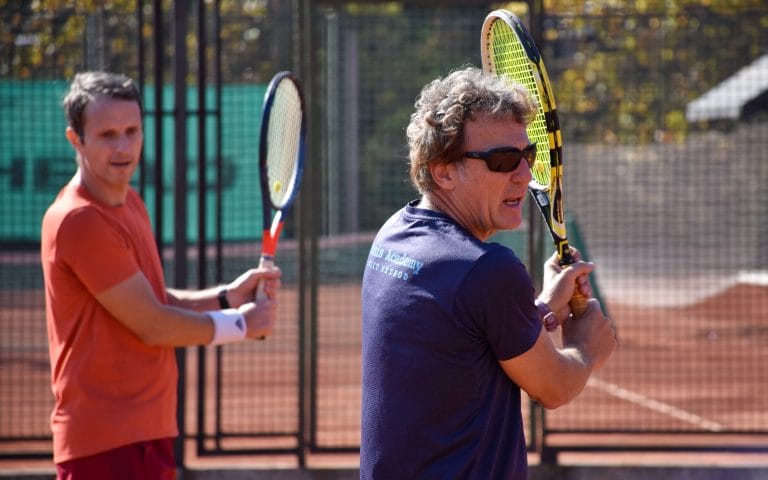
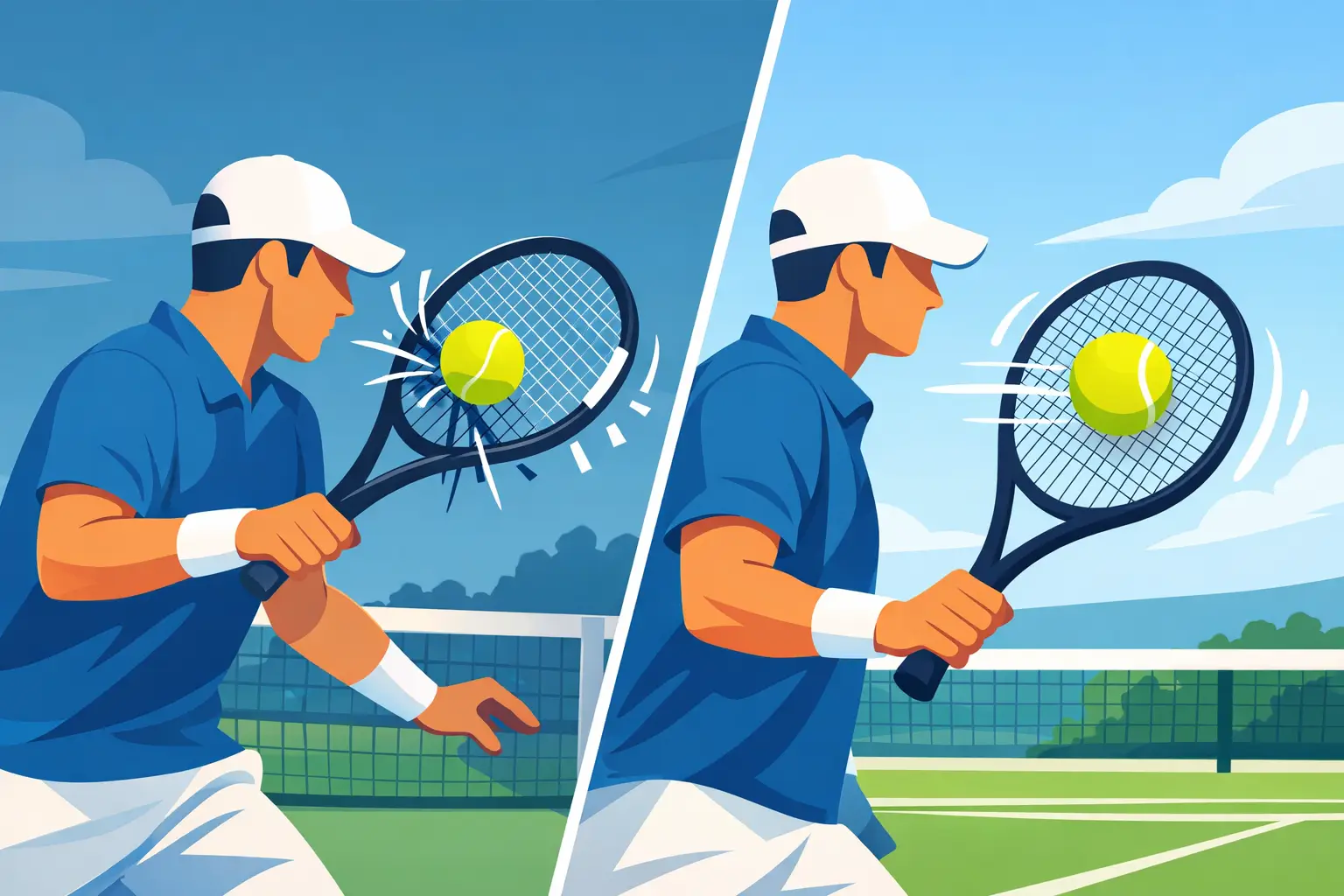
Tennis Stroke Fix for Chronic Framing
You do not keep framing the ball because you are unlucky. You keep framing it because the racket face, spacing, and timing are breaking down in the same place over and over again. A real tennis stroke fix for chronic framing starts by identifying that breakdown precisely, not by telling yourself to “watch the ball” one more time.
Players who frame regularly usually feel the same frustration. Some days the forehand flies off the top edge. Other days the backhand catches the side of the frame when the rally speeds up. The pattern looks random, but it is not random. Chronic framing is a technical problem with repeatable causes, which means it can be corrected fast when you train the right piece of the stroke.
Why chronic framing keeps happening
Framing is not one issue. It is the visible result of one or more hidden errors happening before contact. Most players blame the contact point. That is too late. By the time the ball hits the frame, the real mistake has already happened in preparation, spacing, or path.
The first cause is poor distance from the ball. If you crowd the bounce, your swing gets jammed and the frame arrives first. If you drift too far away, you reach, lose the sweet spot, and clip the outside of the racket. This is especially common when players move their feet early, then stop moving and try to hit from whatever spacing they ended up with.
The second cause is late racket preparation. When the takeback starts late, players rush the forward swing and the contact window becomes unstable. That is when the top edge shows up on the forehand and the side frame appears on the backhand. Late preparation often gets worse under pace because the player has no time left to organize the hitting arm and body.
The third cause is a faulty swing path. Many players who frame try to “help” the ball by chopping under it, swiping across it too early, or pulling off the ball with the shoulders. That creates a moving contact point instead of a stable one. The racket face may be open one shot, closed the next, and off-center on both.
The fourth cause is head instability. If the head lifts or the upper body rises before contact, the strike zone changes. It only takes a small change in level to turn a clean hit into a frame. This is common on aggressive balls and on shots players expect to miss.
The tennis stroke fix for chronic framing starts before contact
If you want a reliable tennis stroke fix for chronic framing, stop treating contact as a mystery. Clean contact is built from early recognition, correct spacing, and a repeatable path to the ball. Those are trainable. More important, they are measurable.
Start with the unit turn. The moment you read forehand or backhand, the shoulders and racket need to organize together. Not eventually. Immediately. Early preparation gives you time to adjust your feet, and footwork is what creates the correct distance from the ball.
Next, protect your spacing all the way into contact. Most players move to the ball, then freeze. Strong hitters do the opposite. They keep making small adjustment steps so the ball enters the same hitting zone every time. If you are framing, there is a good chance your last two steps are missing or mistimed.
Then simplify the path. The racket should travel to the ball on a clean line that matches the shot you want. A stroke that loops too much, cuts too much, or changes direction abruptly near contact is far harder to time. When the path becomes simpler, the sweet spot shows up more often.
What players get wrong when they try to fix framing
Most self-corrections fail because they focus on symptoms instead of causes. Telling a player to relax more can help if tension is the issue, but it does nothing if the real problem is a late setup. Telling a player to keep their eye on the ball can help attention, but it does not solve bad spacing.
Another mistake is changing too many things at once. Grip, stance, swing speed, follow-through, and contact point all get adjusted in a single session, and the player leaves more confused than before. Chronic framing does not require ten fixes. It requires the right fix.
Players also overestimate how much power is involved. Many framed balls happen because the player tries to swing harder before the strike is under control. The body speeds up, the arm rushes, and the contact zone disappears. First establish clean contact. Then add speed.
How to diagnose your own framing pattern
You can identify the source of framing quickly if you pay attention to where on the frame the ball lands and when it happens.
If the ball hits the top of the frame, you are often too low with the racket before contact, too late, or dropping your hitting structure and trying to lift at the last second. If the ball hits the side of the frame, spacing is usually off, or the shoulders are rotating away too soon. If framing happens mostly on fast incoming balls, preparation is likely late. If it happens on routine balls, the issue is more often spacing or path.
Forehand and backhand patterns matter too. A player who frames only on the forehand often has a rushed forward swing or inconsistent distance management. A player who frames mostly on the two-handed backhand may be crowding the ball or pulling the front shoulder open. The details matter because the correction has to match the pattern.
A practical tennis stroke fix for chronic framing
The fastest route is to strip the stroke down and rebuild contact in the correct order. First, reduce speed. Hitting harder will not reveal the answer. It will hide it. Feed slower balls and rehearse early preparation with a clear unit turn.
Second, train spacing on purpose. Set up so the ball arrives at a comfortable distance from your body and keep the feet active until the last moment. This one change solves more framing than players expect. Good spacing is not cosmetic. It is the base of clean contact.
Third, shorten the swing temporarily. A compact swing makes the racket easier to control through the hitting zone. This does not mean pushing the ball. It means removing extra motion that ruins timing. Once the sweet spot becomes consistent, length can return without the old error.
Fourth, hold the head still through contact. Not rigid, but disciplined. Let the ball leave the strings before the eyes and chest lift. This stabilizes strike height and improves center contact immediately.
Finally, build back to live speed step by step. Mini tennis, controlled feeds, cooperative rallying, then competitive pace. If you skip levels and go straight to full speed, the old pattern often comes back before the new one is stable.
This is exactly why method matters. A scientific progression beats guesswork every time. Mili’s Split Method was built on that principle – isolate the fault, correct it directly, and produce clean groundstrokes fast instead of spending months circling the same mistake.
Why some players improve in days and others stay stuck
The difference is not talent. It is clarity. Players improve quickly when the correction is specific enough to remove doubt. If you know your framing comes from late preparation and poor spacing on crosscourt backhands, the fix becomes concrete. If you just know you are “off,” progress drags.
Coaches face the same reality. Generic advice creates slow improvement because the player cannot feel what needs to change. Precise instruction creates immediate feedback. That is why some players look transformed in a short window. The right correction removes wasted reps.
There is also a trade-off. Some players need a mechanical reset first. Others need better movement patterns around an otherwise decent stroke. If you force every player into the same solution, you miss the real cause. Chronic framing always has a reason, but the reason is not identical in every case.
What clean contact should feel like
When the stroke is organized correctly, contact feels quiet. The racket does not wobble. The ball comes off the strings with a heavier, more centered sound. You do not feel like you are chasing the ball at the last instant. You feel set, balanced, and on time.
That is the standard to chase. Not lucky clean hits. Not one good rally. Repeatable contact under pressure. Once framing disappears, the rest of the game opens up. Direction improves, pace becomes easier to access, and confidence stops rising and falling with every mishit.
If you are dealing with chronic framing, take it as a clear signal, not a mystery. The stroke is telling you exactly where it breaks down. Fix that one point with precision, and the sweet spot starts showing up a lot more often.