

The journey to becoming an LTA tennis coach opens doors to a rewarding career built on developing players, refining techniques, and contributing to the growth of tennis across the United Kingdom. The Lawn Tennis Association (LTA) has established comprehensive pathways for coaches at every stage, from beginners entering the profession to experienced professionals seeking advanced certifications. Understanding the structure, requirements, and opportunities within the LTA coaching framework helps aspiring coaches make informed decisions about their professional development while ensuring they deliver quality instruction aligned with industry standards.
Understanding the LTA Tennis Coach Certification Framework
The LTA’s Coach Accreditation scheme provides a structured progression system designed to develop coaching skills systematically. This framework ensures that every lta tennis coach meets rigorous professional standards while building expertise through practical experience and continuous learning.
Certification Levels Explained
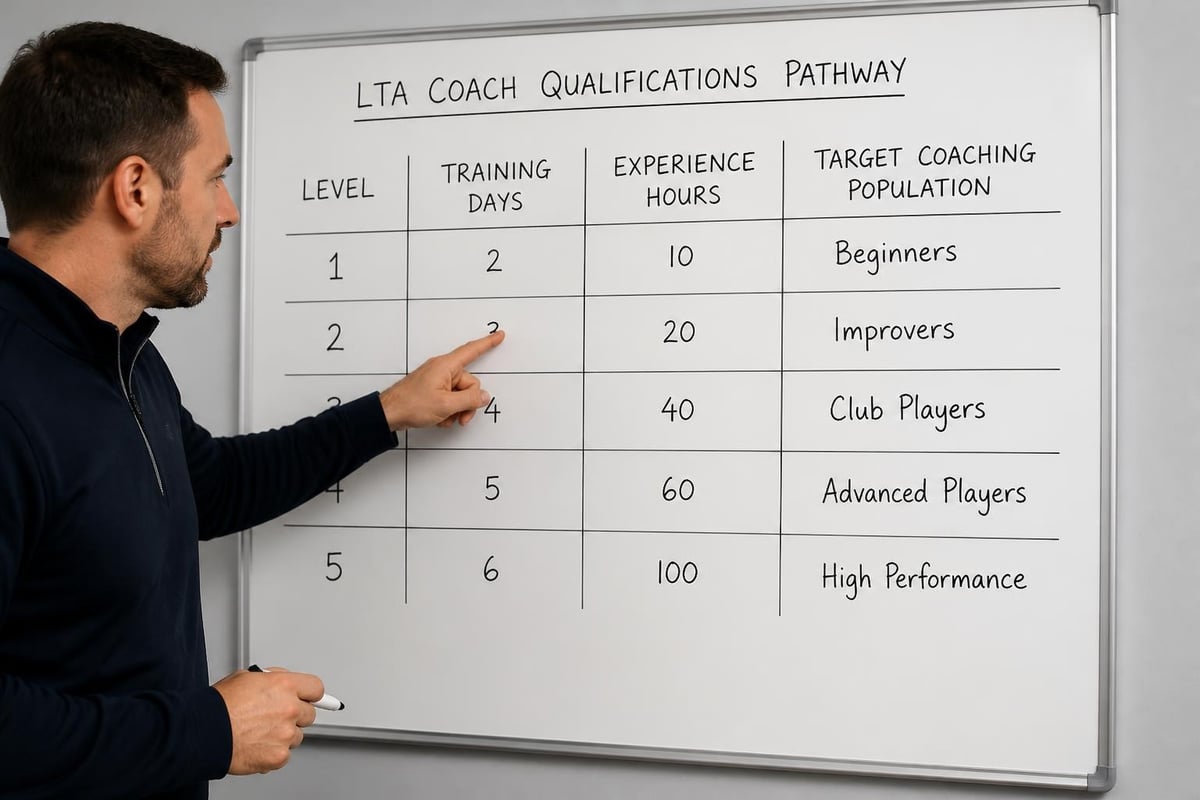
The LTA organizes coaching qualifications into distinct levels, each targeting specific competencies and career stages:
- Level 1: Foundation skills for assisting qualified coaches
- Level 2: Entry-level qualification for independent coaching
- Level 3: Advanced training for full-time coaching careers
- Level 4: Performance coaching for competitive players
- Level 5: Elite coaching for professional development
Each level requires completing core training modules, practical assessments, and demonstrated hours of coaching experience. The progression system allows coaches to advance at their own pace while ensuring they possess the necessary knowledge before moving forward.
| Certification Level | Duration | Target Audience | Prerequisites |
|---|---|---|---|
| Level 1 | 2 days | New coaches, volunteers | None |
| Level 2 | 5 days | Part-time coaches | Level 1 or equivalent |
| Level 3 | 11 days | Full-time professionals | Level 2, 100+ hours |
| Level 4 | Variable | Performance coaches | Level 3, extensive experience |
| Level 5 | Extended | Elite coaches | Level 4, proven track record |
Starting Your Journey as an LTA Tennis Coach
Breaking into tennis coaching requires more than passion for the sport. The comprehensive guide on becoming a tennis or padel coach outlines the essential steps for launching your coaching career.
Initial Requirements and Prerequisites
Before enrolling in an lta tennis coach program, candidates should assess their readiness:
Playing Experience: While you don't need to be a professional player, understanding tennis fundamentals, rules, and basic techniques proves essential. Many successful coaches were recreational players who developed deep technical knowledge through study and observation.
Age and Background Checks: Coaches must be at least 16 years old for Level 1 certification. Working with juniors requires enhanced DBS (Disclosure and Barring Service) checks to ensure player safety.
First Aid Certification: Current first aid qualifications demonstrate preparedness for managing injuries and emergencies during training sessions.
The initial investment in becoming an lta tennis coach includes course fees, certification costs, insurance, and ongoing professional development expenses. However, this investment pays dividends through career opportunities ranging from club coaching to private instruction.
Choosing Your Coaching Pathway
Different coaching paths suit different career goals:
- Recreational Coaching: Focus on beginners and club players seeking fitness and enjoyment
- Junior Development: Specialize in youth programs building foundational skills
- Performance Coaching: Work with competitive players pursuing tournament success
- Specialized Instruction: Concentrate on specific aspects like serve technique or mental game
The LTA Level 2 and Level 3 Qualifications
Most coaches begin their professional journey with Level 2 certification, which provides the foundation for independent coaching. The LTA Tennis Coach Qualification represents a significant commitment to professional development.
Level 2 Certification Deep Dive
The Level 2 course equips coaches with essential skills for delivering group and individual lessons. Course content covers:
- Stroke production and technical analysis
- Lesson planning and session structure
- Player assessment and progression tracking
- Safety protocols and risk management
- Communication strategies for different age groups
- Introduction to game-based coaching methods
Practical assessments evaluate teaching ability, technical knowledge, and professionalism. Candidates must demonstrate competency across various scenarios, from coaching children to managing adult beginners.
Advancing to Level 3
For coaches pursuing full-time careers, Level 3 represents the professional benchmark. This 11-day intensive program delves deeper into coaching methodology, periodization, and player development systems.
Core Training Modules include advanced technical analysis, tactical coaching, physical conditioning principles, and sports psychology fundamentals. Elective Modules allow specialization in areas such as high-performance coaching, disability tennis, or coaching business development.
The roles and responsibilities of an LTA Level 2 accredited Tennis Coach extend beyond court instruction to include program development, player retention strategies, and community engagement.

Advanced Coaching Methodologies and Techniques
Effective lta tennis coach professionals continuously refine their teaching methods to maximize player improvement. While the LTA provides excellent foundational training, exploring diverse coaching philosophies enhances instructional effectiveness.
Technical Correction Approaches
Different coaches employ varying strategies for fixing technical flaws:
Traditional Progressive Method: Breaking down strokes into component parts, isolating each element, and gradually combining them. This approach works well for beginners building initial muscle memory but can be time-consuming for experienced players with ingrained habits.
Holistic Movement Patterns: Focusing on natural athletic motion and full-body coordination rather than isolated positions. This method emphasizes feel and flow over mechanical precision.
Accelerated Correction Systems: Specialized approaches that identify root causes of technical problems and address them through targeted interventions. Some innovative methods guarantee specific improvements within compressed timeframes.
For coaches seeking to differentiate themselves and achieve faster results with their students, exploring advanced technical correction methods beyond standard LTA curriculum can provide significant competitive advantages. The tennis coaching courses offered through specialized programs teach unique methodologies like the Split Method, which focuses on rapid stroke correction through scientifically-based technical interventions that complement traditional coaching approaches.

Student-Centered Learning
Modern coaching emphasizes adapting instruction to individual learning styles:
- Visual Learners: Benefit from demonstrations, video analysis, and visual cues
- Auditory Learners: Respond to verbal explanations and rhythmic counting
- Kinesthetic Learners: Need physical guidance and repetition through feel
Observant coaches identify these preferences quickly and adjust their communication accordingly, accelerating skill acquisition and maintaining engagement.
Building a Sustainable Coaching Business
Certification represents just the beginning of a coaching career. Successful lta tennis coach professionals develop business acumen alongside technical expertise.
Marketing and Client Acquisition
Digital Presence: Professional websites, social media profiles, and online booking systems attract modern clients who research coaches before making contact.
Reputation Building: Testimonials, player success stories, and visible results generate referrals more effectively than advertising.
Niche Specialization: Positioning yourself as an expert in specific areas (junior development, senior fitness, stroke correction) helps you stand out in competitive markets.
Pricing Strategies
| Service Type | Typical Rate Range | Considerations |
|---|---|---|
| Group Lessons (4-6 players) | £15-30 per person/hour | Lower per-person rate, higher total revenue |
| Semi-Private (2-3 players) | £25-45 per person/hour | Balance of attention and affordability |
| Private Instruction | £40-80 per hour | Premium pricing, individualized focus |
| Online Coaching | £30-60 per session | Lower overhead, geographical flexibility |
Rates vary significantly based on location, coach credentials, experience level, and local market conditions. Urban areas with higher living costs generally support premium pricing, while rural markets may require more competitive rates.
Multiple Revenue Streams
Diversifying income sources creates financial stability:
- Regular group programs with recurring enrollment
- Private lesson packages sold in blocks
- Holiday camps and intensive clinics
- Online video analysis and remote coaching
- Coach education and mentorship programs
- Equipment sales and stringing services
Continuous Professional Development for LTA Coaches
The LTA provides extensive resources for ongoing coach education, recognizing that learning never stops for effective instructors.
Maintaining Accreditation
LTA accreditation requires renewal every two years, ensuring coaches stay current with:
- Safeguarding updates and child protection policies
- First aid certification renewals
- Continuing education credits through workshops and courses
- Insurance coverage verification
- Enhanced DBS check updates
This renewal process maintains professional standards across the coaching community while encouraging continuous learning.
Advanced Training Opportunities
Beyond initial certifications, coaches can pursue specialized training:
Performance Coaching: Programs like the LTA Tennis Coach Level 3 Core Training develop skills for working with competitive players pursuing regional, national, or international success.
Disability Tennis: Specialized instruction for working with players with physical or cognitive differences, expanding coaching opportunities and community impact.
Sports Science Integration: Understanding biomechanics, physiology, and motor learning principles elevates coaching effectiveness through evidence-based practice.
Business and Leadership: Management skills for running tennis programs, supervising assistant coaches, and developing facility operations.
Working Within Different Coaching Environments
An lta tennis coach can pursue varied career paths depending on personal preferences and goals.
Club-Based Coaching
Tennis clubs offer stable environments with established player bases. Responsibilities typically include:
- Delivering group programs for members across ability levels
- Organizing club championships and social events
- Managing junior development pathways
- Coordinating with club management on programming
- Building community and member retention
Advantages: Consistent schedule, facility access, built-in clientele
Challenges: Limited income ceiling, facility politics, seasonal fluctuations
Independent Coaching
Self-employed coaches enjoy flexibility and unlimited earning potential but assume greater business responsibilities:
- Securing court time at various facilities
- Managing all marketing and client acquisition
- Handling administrative tasks and scheduling
- Maintaining equipment and supplies
- Building reputation without institutional backing
Schools and Universities
Educational institutions employ coaches for team training, physical education classes, and extracurricular programs. These positions often provide benefits and regular hours but may require additional teaching certifications.
Online Coaching Platforms
Digital coaching has expanded dramatically since 2020, offering geographic flexibility and scalability. Effective online instruction requires:
- Quality video production and analysis software
- Clear communication skills for remote instruction
- Structured programs adaptable to various skill levels
- Systems for tracking progress without in-person observation
The Future of Tennis Coaching
The tennis coaching profession continues evolving with technological advances, changing player expectations, and shifting industry dynamics.
Technology Integration
Modern coaches leverage digital tools for enhanced instruction:
- Video analysis software for frame-by-frame technique breakdown
- Wearable sensors tracking racquet speed, spin rate, and contact point
- Virtual reality training for tactical decision-making
- Mobile apps for lesson scheduling, payment processing, and progress tracking
- Online learning platforms for supplemental instruction
Emphasis on Holistic Development
Contemporary coaching extends beyond technical skills to encompass:
Mental Performance: Building resilience, focus, and competitive mindset
Physical Conditioning: Age-appropriate fitness and injury prevention
Life Skills: Teaching responsibility, time management, and goal-setting through tennis
Enjoyment and Retention: Creating positive experiences that foster lifelong participation
Growing Demand for Qualified Coaches
Tennis participation has increased significantly in recent years, creating demand for qualified instructors. The coach education programs offered through various providers help meet this need while raising professional standards across the industry.
Differentiating Yourself in a Competitive Market
With thousands of certified coaches operating across the UK, standing out requires more than basic qualifications.
Developing Coaching Specializations
Stroke Correction Expertise: Many recreational players struggle with ingrained technical flaws that limit their progress. Coaches who master efficient correction methods become invaluable resources for this underserved market segment.
Age Group Specialization: Focusing exclusively on specific demographics (young children, high school competitors, senior players) allows development of targeted expertise and refined programming.
Playing Style Development: Helping players develop distinctive tactical approaches based on their physical attributes and personalities rather than cookie-cutter patterns.
Building Coaching Philosophy
Articulating clear coaching principles helps attract aligned clients:
- What do you believe about player development?
- How do you balance technical perfection with competitive effectiveness?
- What role does enjoyment play in your programming?
- How do you measure coaching success?
Coaches with defined philosophies attract students who share their values, creating more satisfying coaching relationships and better outcomes.
Measuring and Showcasing Results
Quantifiable Improvements: Tracking metrics like serve speed, first-serve percentage, or unforced error rates demonstrates tangible progress.
Tournament Success: Documenting student achievements in competitions provides social proof of coaching effectiveness.
Student Testimonials: First-hand accounts from satisfied clients influence prospective students more than self-promotion.
Before/After Video Comparisons: Visual documentation of technical improvements powerfully communicates coaching impact.
Becoming an lta tennis coach offers a fulfilling career path combining athletic passion with teaching, business development, and continuous learning. The LTA's comprehensive certification framework provides the foundation, but long-term success requires ongoing skill development, business acumen, and dedication to player improvement. For coaches committed to achieving exceptional results and learning advanced technical correction methods, Tennis Method Mili Split (MSM) offers specialized training in the Split Method, delivering guaranteed stroke corrections that complement traditional coaching approaches and help you stand out in a competitive coaching marketplace.