Tennis Training Drills to Transform Your Game in 2026
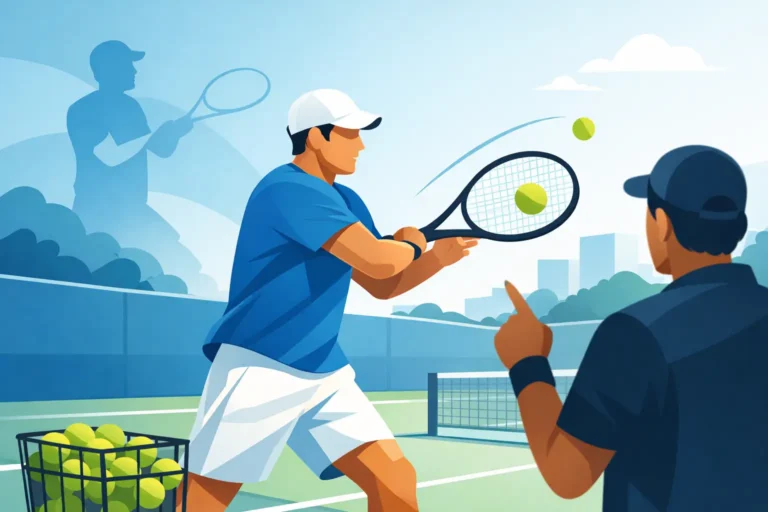
Tennis training drills form the backbone of every successful player's development, regardless of skill level. Whether you're a beginner learning proper stroke mechanics or an advanced competitor refining tactical awareness, structured practice routines accelerate improvement exponentially. The most effective training regimens combine technical precision, strategic repetition, and biomechanical efficiency to transform raw potential into consistent performance. Modern approaches emphasize scientific methodology, ensuring that every minute spent on court delivers measurable progress toward specific goals.
Foundation Elements of Effective Training Programs
The architecture of successful tennis training drills begins with understanding fundamental movement patterns and stroke mechanics. Every drill should target specific technical weaknesses while reinforcing existing strengths through deliberate practice.
Building Blocks for Technical Mastery
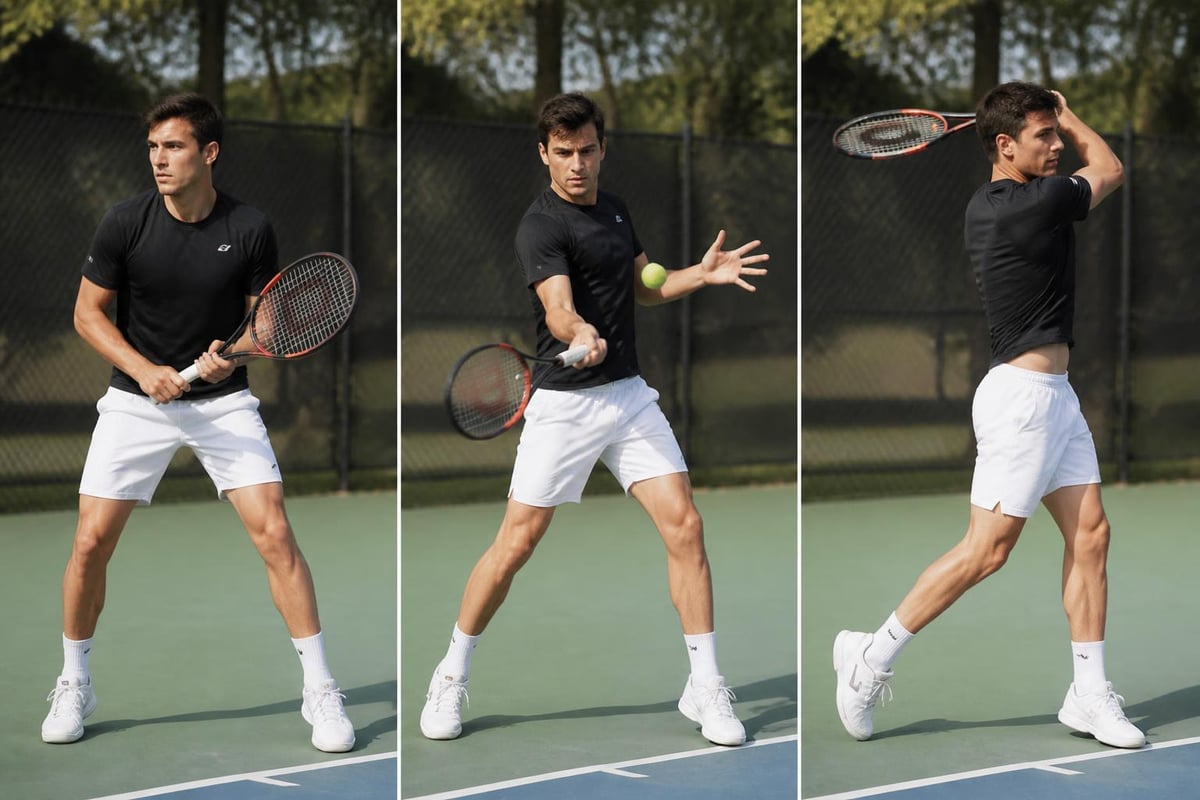
Quality training prioritizes proper technique over sheer repetition. Players who focus on biomechanically sound movements from the beginning avoid developing compensatory habits that become increasingly difficult to correct over time.
Essential components include:
- Contact point consistency for both groundstrokes and volleys
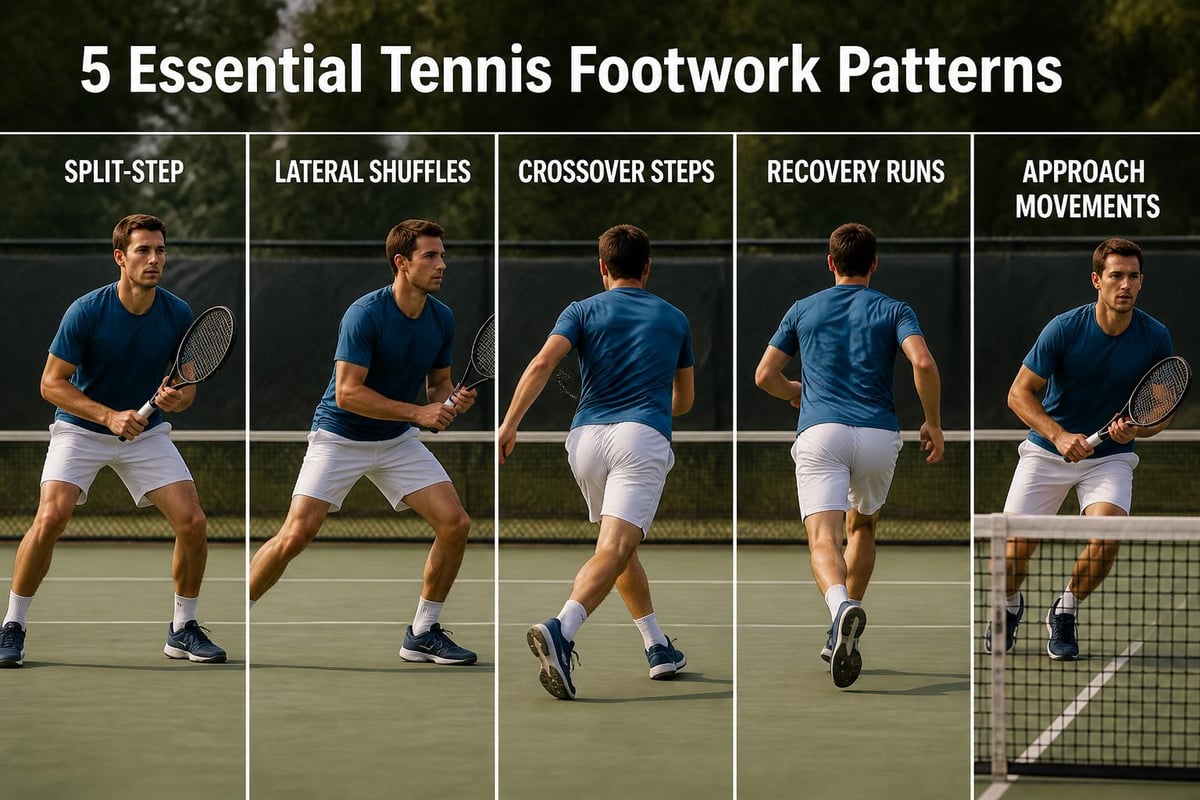
- Split-step timing coordinated with opponent contact
- Recovery positioning after each stroke execution
- Weight transfer patterns that maximize power efficiency
- Racket preparation speed to handle varying ball speeds
The comprehensive drill libraries available today provide structured frameworks categorized by specific skill areas, making it easier to identify exactly which elements need refinement. These resources prove particularly valuable when designing progressive training sequences that build upon previously mastered techniques.
Measurement and Progress Tracking
Modern training methodology demands quantifiable metrics rather than subjective assessments. Tracking improvement through specific performance indicators creates accountability and reveals which drills deliver optimal returns on invested practice time.
| Metric Category | Measurement Method | Target Frequency |
|---|---|---|
| Shot Accuracy | Target hit percentage | Every session |
| Ball Depth Control | Landing zone analysis | Weekly |
| Serve Consistency | First serve percentage | Daily |
| Movement Efficiency | Court coverage speed | Bi-weekly |
| Rally Tolerance | Consecutive shot count | Every session |
Advanced players now leverage technology-enhanced training methods that provide real-time feedback on swing mechanics, enabling immediate adjustments during practice sessions.
Groundstroke Development Through Systematic Drilling
Tennis training drills focused on groundstrokes require methodical progression from stationary positions to dynamic movement patterns. The transition from basic ball-feeding exercises to realistic match-simulation scenarios determines how effectively practice translates to competitive performance.
Crosscourt Consistency Patterns
Crosscourt rallies provide the safest margin for error while developing rhythm and timing. Beginning players should establish baseline consistency before attempting more aggressive shot selections.
Start with cooperative exchanges focusing on depth and spin consistency. Partners should aim for 20 consecutive balls landing beyond the service line. Gradually increase pace while maintaining trajectory control.
Progressive difficulty levels:
- Stationary position, medium-paced feeds
- Side-to-side movement within doubles alley
- Full-court coverage with depth variation
- Adding directional changes mid-rally
- Incorporating approach shot opportunities
The practical home practice drills outlined by experienced coaches demonstrate how players can maintain consistency even without court access, using wall practice and target-focused repetitions.
Down-the-Line Precision Training
Down-the-line shots demand superior accuracy due to reduced margin over the net and shorter court length. These tennis training drills develop the confidence needed for offensive positioning during points.
Execute sets of ten consecutive attempts, counting only those landing within three feet of the sideline. Begin from mid-court positions before extending to baseline distances. Track success rates weekly to monitor improvement trajectories.
Players serious about rapid technical improvement often benefit from specialized coaching that addresses individual mechanical inefficiencies. The tennis coaching courses offered through proven scientific methods can identify and correct stubborn technical flaws that generic drills fail to address, particularly for those targeting competitive advancement.

Serve Development and Power Generation
Serving represents the only stroke with complete player control over timing and positioning, making it the most critical weapon to develop through dedicated practice. Tennis training drills for serves must balance power generation with consistency and placement accuracy.
Target-Based Serving Sequences
Place markers in each service box corner and along the center service line. Execute serving rounds targeting specific zones in predetermined sequences.
Sample rotation pattern:
- Wide serve to deuce court (five repetitions)
- Body serve to ad court (five repetitions)
- T-serve to deuce court (five repetitions)
- Wide serve to ad court (five repetitions)
Calculate landing percentage for each zone separately. Professional benchmarks suggest 70% first-serve accuracy with proper technique, though recreational players should initially target 60% before emphasizing power increases.
Second Serve Security Systems
Second serve reliability determines confidence levels during competitive situations. These tennis training drills focus on developing consistent kick serves and slice variations that minimize double-fault risks.
Practice second serves exclusively during designated sessions, refusing temptation to blast first serves. Execute 50 consecutive second serves, resetting the count after any double fault. This psychological pressure simulation prepares players for match tension scenarios.
Footwork Fundamentals and Court Coverage
Movement efficiency separates competent players from exceptional ones. Tennis training drills emphasizing footwork create the foundation for reaching balls earlier and maintaining balanced stroke production.
Directional Change Agility
Set up cone patterns requiring rapid direction changes that mirror actual point patterns. Sprint forward, backpedal, shuffle laterally, and rotate through defensive positions.
The specialized footwork programs designed by movement specialists offer compact seven-minute workout sequences that dramatically improve court coverage without requiring extensive time commitments.
Movement pattern variations:
- Spider drills touching baseline and net alternately
- Box patterns emphasizing 90-degree angle changes
- Diagonal recovery runs simulating wide ball retrieval
- Forward-backward transitions from baseline to net
Balance and Recovery Positioning
Maintaining dynamic balance through shot execution allows quicker recovery to optimal court positioning. Practice hitting groundstrokes while deliberately off-balance, then emphasizing immediate recovery steps.
Execute five-ball sequences where each shot requires full extension or stretch positioning. Focus on explosive first steps back toward center positioning after contact. Quality recovery footwork often proves more valuable than the preceding shot itself.
Volleys and Net Play Mastery
Net play demands different technical skills than baseline exchanges. Tennis training drills for volleys emphasize quick hands, compact swings, and split-step timing coordinated with opponent contact.
Reaction Volley Sequences
Position yourself at net while a partner feeds balls from mid-court at varying speeds and heights. React to each feed without predetermining shot direction, simulating realistic net exchanges.
Begin with moderate-paced feeds to establish proper technique. Gradually increase velocity while maintaining compact preparation and controlled racket face angles. Execute sets of 20 consecutive volleys, tracking error percentages by category (long, wide, netted).
| Volley Type | Setup Position | Target Landing Zone | Success Benchmark |
|---|---|---|---|
| Forehand | Service line | Deep crosscourt | 75% accuracy |
| Backhand | Service line | Deep crosscourt | 70% accuracy |
| High Forehand | Attacking position | Angled short | 65% accuracy |
| Low Backhand | Defensive position | Deep middle | 80% accuracy |
Transition Game Development
Approach shots followed by first volleys represent critical transition moments. Tennis training drills must replicate the timing and positioning challenges inherent in moving forward during points.
Begin from baseline, hitting approach shots down the line, then splitting and moving forward for volley placement. Partners should return approach shots with varying trajectories, forcing adaptive responses. Track successful point conversions to measure transition effectiveness.
Tactical Drills and Pattern Recognition
Understanding common point patterns accelerates decision-making during matches. These tennis training drills develop strategic awareness alongside technical execution.
Situational Point Play
Establish specific scenarios with predetermined starting positions and shot sequences. For example, begin every point with a serve to the deuce court wide, followed by a crosscourt return, then play out the point.
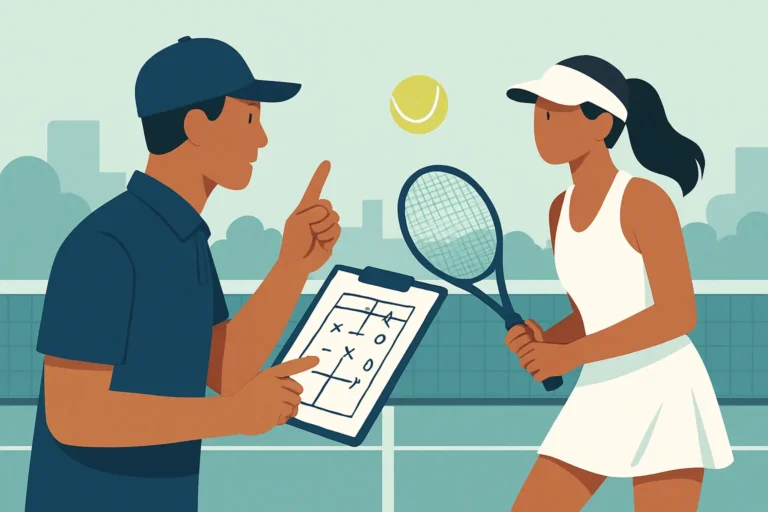
The tactical drill frameworks designed for improving decision-making skills help players recognize exploitable patterns and develop automatic responses to common situations.
Common pattern scenarios:
- Serve plus one: Server must attack immediately after serve
- Return plus one: Returner controls point direction after return
- Baseline grinder: Both players prohibited from approaching net
- Serve and volley: Server must follow every first serve to net
- Moonballer response: Handling high, deep defensive shots
Pressure Point Simulation
Create game-like pressure by playing tie-break formats or establishing consequence-based scoring systems. Execute tennis training drills where losing specific points requires additional conditioning exercises.
Start tie-breaks from various scores (3-3, 5-5, 6-6) to practice performing under different psychological pressure levels. This mental conditioning proves equally valuable as technical skill development for competitive success.
Physical Conditioning Integration
Tennis-specific fitness components must integrate seamlessly with technical drills. Modern training protocols combine stroke work with conditioning elements that replicate match-intensity demands.
Speed and Agility Enhancement
The comprehensive training programs focusing on explosive speed development provide specific exercise demonstrations that translate directly to court performance improvements.
Incorporate resistance bands, agility ladders, and plyometric exercises between drill sets. This approach maintains elevated heart rates while developing sport-specific power and quickness.
Sample integrated session structure:
- Five minutes: Dynamic warmup with movement patterns
- Ten minutes: Groundstroke consistency drills
- Three minutes: Agility ladder sequences
- Ten minutes: Serve and return combinations
- Three minutes: Resistance band explosive movements
- Ten minutes: Point play simulation
- Five minutes: Cool-down stretching protocols
Endurance Building Through Extended Rallies
Competitive matches often extend beyond two hours, demanding superior cardiovascular conditioning. Tennis training drills emphasizing extended rally tolerance prepare players for prolonged baseline exchanges.
Execute rally drills targeting specific minimum shot counts before attempting winners. Begin with 10-shot minimums, progressing toward 20-shot rallies as fitness improves. Rest intervals should mirror match change-over durations to replicate competitive recovery patterns.
Customizing Drills for Individual Needs
Generic practice routines produce mediocre results. Effective tennis training drills address individual weaknesses while reinforcing personal strengths and preferred playing styles.
Identifying Technical Deficiencies
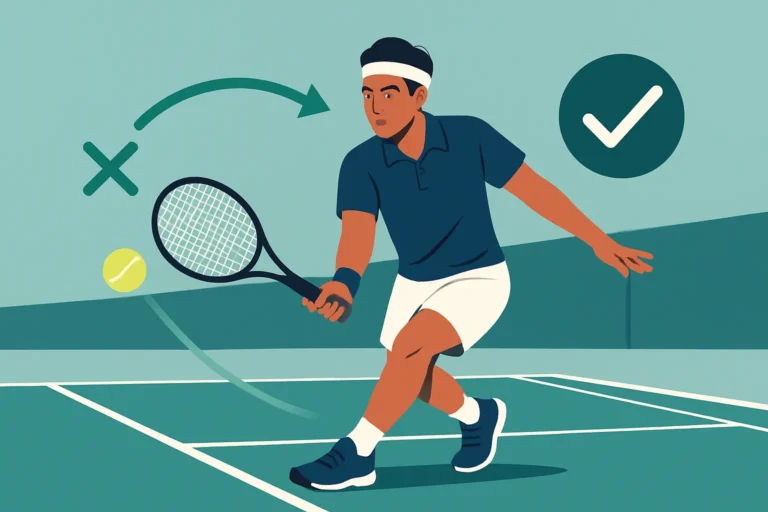
Video analysis reveals mechanical flaws invisible during live play. Record practice sessions from multiple angles, then review footage specifically analyzing preparation timing, contact points, and follow-through patterns.
The expert coaching insights from professional instructors emphasize biomechanical efficiency as the foundation for all improvement initiatives, regardless of current skill levels.
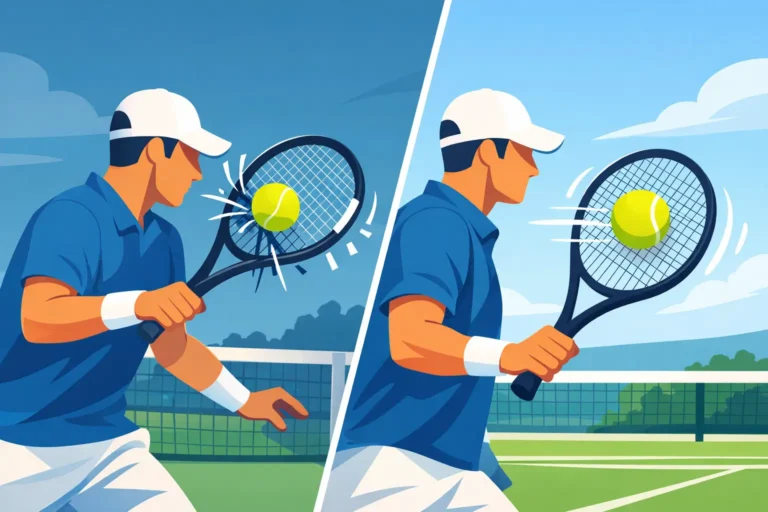
Common technical breakdowns requiring targeted drilling include late preparation, inconsistent toss placement, closed racket faces at contact, incomplete weight transfers, and abbreviated follow-throughs. Each deficiency demands specific corrective exercises executed with heightened awareness.
Adapting Difficulty Progressions
Drill difficulty should increase incrementally as competency develops. Rushing advanced variations before mastering fundamentals creates frustration and reinforces poor habits.
Progression framework:
- Stationary feeds: Establish basic mechanics without movement demands
- Predictable patterns: Add simple lateral movement with known trajectories
- Random feeds: Introduce uncertainty requiring adaptive responses
- Live ball: Partner-generated shots with realistic pace and spin
- Competitive points: Full match simulation with scoring pressure
Players should demonstrate 80% success rates at each level before advancing to increased difficulty. This patient approach ensures solid technical foundations supporting long-term development.
Practice Session Structure and Planning
Organized training sessions maximize improvement efficiency. Tennis training drills should follow logical sequences that warm up progressively while maintaining focus throughout practice duration.
Optimal Session Architecture
Begin every session with dynamic movement preparation followed by gradual intensity increases. Technical work should occur early when concentration remains sharp, reserving conditioning elements and competitive play for later segments.
Sample two-hour session outline:
| Time Block | Activity Focus | Intensity Level |
|---|---|---|
| 0-10 min | Dynamic warmup, movement prep | Low |
| 10-25 min | Groundstroke technical work | Medium |
| 25-40 min | Serve development | Medium-high |
| 40-50 min | Volley and transition drills | Medium |
| 50-65 min | Tactical pattern practice | High |
| 65-90 min | Competitive point play | High |
| 90-105 min | Physical conditioning | Very high |
| 105-120 min | Cool-down, flexibility work | Low |
Weekly Training Cycles
Distribute drill emphasis across weekly cycles to prevent overtraining specific movements while ensuring comprehensive skill development. Monday sessions might emphasize groundstrokes, Wednesday focuses on serves and returns, Friday prioritizes net play, with weekends reserved for match play and recovery.
Advanced players preparing for tournaments should periodize training with progressive overload phases followed by taper periods allowing physical and mental recovery before competition.
Consistent execution of targeted tennis training drills transforms technical potential into competitive performance across all skill levels. Whether refining specific strokes, developing tactical awareness, or building match-ready conditioning, systematic practice methodologies deliver measurable improvements when applied with dedication and precision. For players seeking rapid technical corrections and breakthrough results, Tennis Method Mili Split (MSM) offers scientifically proven approaches that guarantee stroke corrections in remarkably short timeframes, with specialized programs designed for competitive juniors, serious recreational players, and coaches pursuing advanced teaching certifications.