
Why Do I Mishit Tennis Forehands?
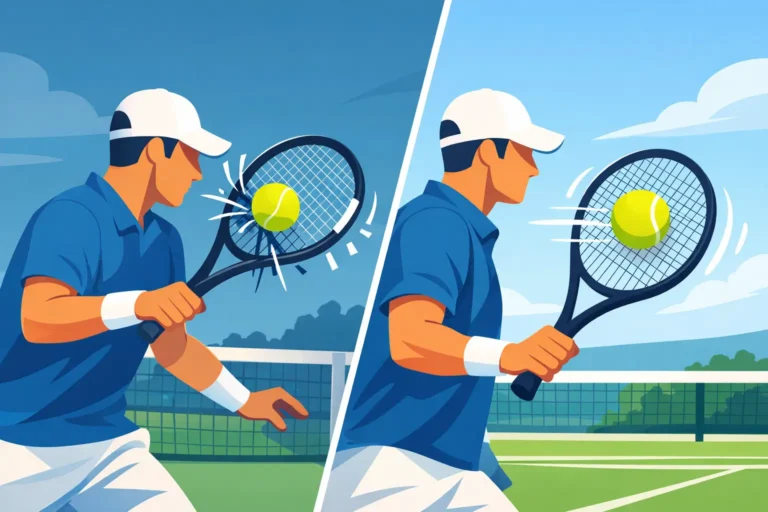
You know the feeling. The ball sits up, you swing with confidence, and somehow the forehand still flies off the frame, lands short, or sprays wide. If you keep asking, why do I mishit tennis forehands, the answer is rarely “just watch the ball” or “move your feet more.” Mishits come from specific technical errors, and once you identify the real one, improvement can happen fast.
Why do I mishit tennis forehands so often?
Most players think a mishit is a contact problem. It is not. Contact is the final result of what happened earlier. The setup, spacing, split step, swing path, and racket face position all decide whether the strings meet the ball cleanly.
That is why random advice usually fails. One coach tells you to swing lower to higher. Another tells you to relax. Another says your grip is wrong. Sometimes those points matter, but they are not always the true cause. A clean forehand is built from a sequence, and if one part is off, the contact point breaks down.
The good news is that forehand mishits are not mysterious. They are predictable. Better still, they are correctable.
The real causes behind forehand mishits
Poor spacing is the biggest one
If the ball gets too close to your body, you jam yourself and hit late or off the frame. If the ball gets too far away, you reach, lose control of the racket face, and miss the center of the strings. In both cases, the contact feels inconsistent because your body is guessing instead of arriving at the same distance every time.
Most players do not realize their spacing is wrong until they see it clearly. They think they are set, but their feet stop too early or too late. One small adjustment step can be the difference between a clean strike and a mishit.
This is where serious coaching separates itself from general instruction. When spacing is taught precisely, the forehand starts repeating. That is not luck. That is structure.
Your split step is late or missing
A lot of players focus only on the swing, but the swing starts before the racket moves. If your split step is late, your first move to the ball is late. Then everything after that becomes rushed. You crowd the contact, pull off the shot, or flick your arm to compensate.
This is one reason players mishit easy balls. The ball looks simple, so they relax too much before it bounces. Then they react late, arrive cramped, and blame their forehand technique. In reality, the problem started with preparation.
The contact point is too far back
A forehand needs a clear contact zone out in front. When contact drifts beside your body or behind it, the racket face becomes unstable. You lose direction, power, and timing. That is when balls frame, float, or hook unexpectedly.
Players often say, “I feel like I have no control on my forehand.” Usually that means they are not meeting the ball at the right distance in front. The fix is not to swing harder. The fix is to organize the body so the ball arrives where the racket can strike it cleanly.
Your swing path changes from ball to ball
Inconsistent swing shape creates inconsistent contact. If one forehand is compact and the next one is too long, your timing shifts. If one follow-through wraps across and the next one lifts too much, your racket face changes through contact.
This does not mean every forehand should look identical. High balls, low balls, and wide balls require adjustments. But the foundation should still be repeatable. When the pattern is stable, the strings find the ball more often.
You are trying to add power before you own the strike
This is common in ambitious players and coaches who want a modern forehand. They chase racket-head speed before they control position and contact. The result is violent effort with poor ball quality.
Power is a reward for correct mechanics. It is not a shortcut. If your center contact is unreliable, adding more speed usually makes the mishits worse.
Why do I mishit tennis forehands under pressure?
Pressure exposes flaws that are already there. It does not create them.
When points matter, the body returns to its most stable habit. If your forehand depends on perfect timing and last-second adjustments, pressure will break it. If your forehand is built on reliable preparation and spacing, pressure will not take it away so easily.
This is why some players look great in rally practice and then mishit during match play. Their technique is not truly organized. It only works when the pace is predictable. The moment the ball speed changes or the situation gets tense, the hidden weakness shows up.
A stable forehand should hold up on a dead ball, a heavy ball, a short ball, and a pressure point. If it does not, you do not need more motivational advice. You need a better method.
The mistakes players make when trying to fix it
The first mistake is changing too many things at once. Grip, backswing, stance, wrist, follow-through, head position, footwork – players pile on corrections and end up worse. When everything changes, nothing settles.
The second mistake is treating symptoms instead of causes. If you frame the ball, you might think the racket is the problem. If the ball lands short, you might think you need more power. If the ball flies long, you might think you need more topspin. Sometimes the actual issue is simply that your feet never created the right spacing.
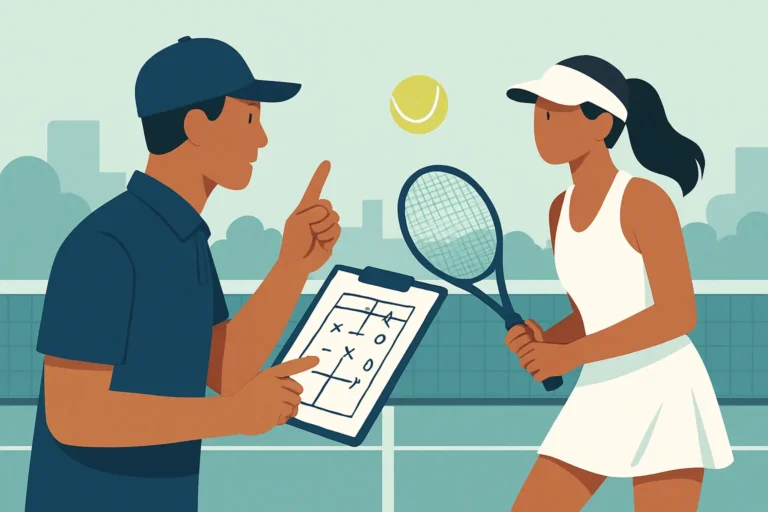
The third mistake is relying on feel alone. Feel matters, but feel can also lie. Many players say, “It felt early,” when video shows they were late. Others say, “I thought I was far enough from the ball,” but the frame tells the truth. Results improve when correction is precise, not guessed.
What actually fixes a forehand mishit
First, you need a repeatable split step and first move. That gives you time. Time gives you options. Without time, every forehand becomes an emergency.
Second, you need exact spacing. Not close enough. Not almost right. Exact. The body must learn where the ball should be at contact and how the feet create that distance.
Third, you need a clean and stable contact point in front. This is where ball control lives. When contact happens in the right window, the forehand stops feeling random.
Fourth, your swing pattern must match the ball instead of fighting it. A low ball does not need the same shape as a shoulder-high ball, but both should come from the same technical system. That is how consistency shows up quickly.
This is also why one-size-fits-all tennis instruction wastes so much time. Generic drills can keep a player busy for months without solving the actual forehand fault. A scientific method identifies the exact breakdown and corrects it directly.
At Mili’s Split Method, that direct correction is the point. Players do not need years of vague advice. They need the right sequence, taught the right way, so the forehand begins working in days, not seasons.
A quick self-check for your next practice
On your next hitting session, do not judge the forehand by whether the ball goes in. Judge it by three things. Did you split step on time? Did you create the right distance from the ball? Did you contact in front instead of beside your body?
If those three are inconsistent, your mishits are not random. They are mechanical. That should give you confidence, because mechanical problems can be fixed.
If those three are solid and you still mishit, then look at swing shape and racket face stability. Usually the answer is there. The key is not to guess. Isolate the error, then correct it with a system that produces repeatable contact.
The fastest way to stop mishitting forehands
The fastest path is not more reps with faulty mechanics. It is not tougher feeding. It is not swinging harder and hoping timing appears. The fastest path is identifying the exact reason your contact breaks down and fixing that reason directly.
A good forehand should not feel like a mystery. You should know why it works, and you should know why it fails. Once that clarity is in place, confidence follows naturally.
If you keep asking why do I mishit tennis forehands, stop blaming your talent. Mishits are usually a sign that the sequence is off, not that your ceiling is low. Clean up the sequence, and the ball starts meeting the strings the way it should. That is when the forehand finally becomes a weapon instead of a question mark.
The best part is simple: once you stop guessing and start correcting the true cause, progress gets very fast.