Fastest Fix for Your Tennis Forehand
You don’t need a prettier forehand. You need a forehand that survives pressure.
Most players “work” on their forehand for months and still miss the same ball: the one that lands short, sits up, and begs to be punished. That’s not a talent problem. It’s a sequencing problem. And the fastest way to fix a tennis forehand is to stop chasing ten different tips and install one repeatable contact pattern you can trust when you’re late, tight, or tired.
This is the reality: if your contact point is unstable, everything else becomes negotiation—grip changes, backswing changes, wrist tricks, last-second steering. That’s why traditional forehand advice often feels like you’re patching a leak with tape. The “fix” has to lock in contact first, then let the rest of the stroke organize around it.
The fastest way to fix tennis forehand: rebuild contact first
Your forehand breaks down for one of three reasons: you’re too close, too far, or too late. Those three show up as shanks, arm-y pushes, and frantic wrist flips. The fastest correction is to make contact predictable again by controlling spacing and racquet face stability.
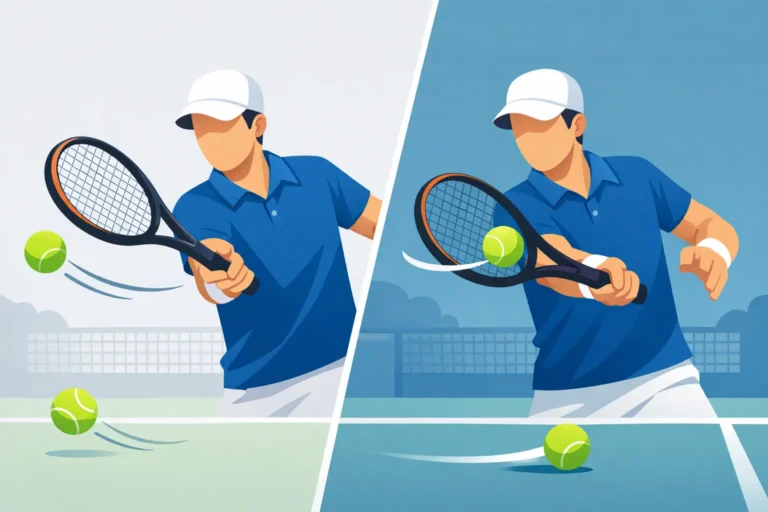
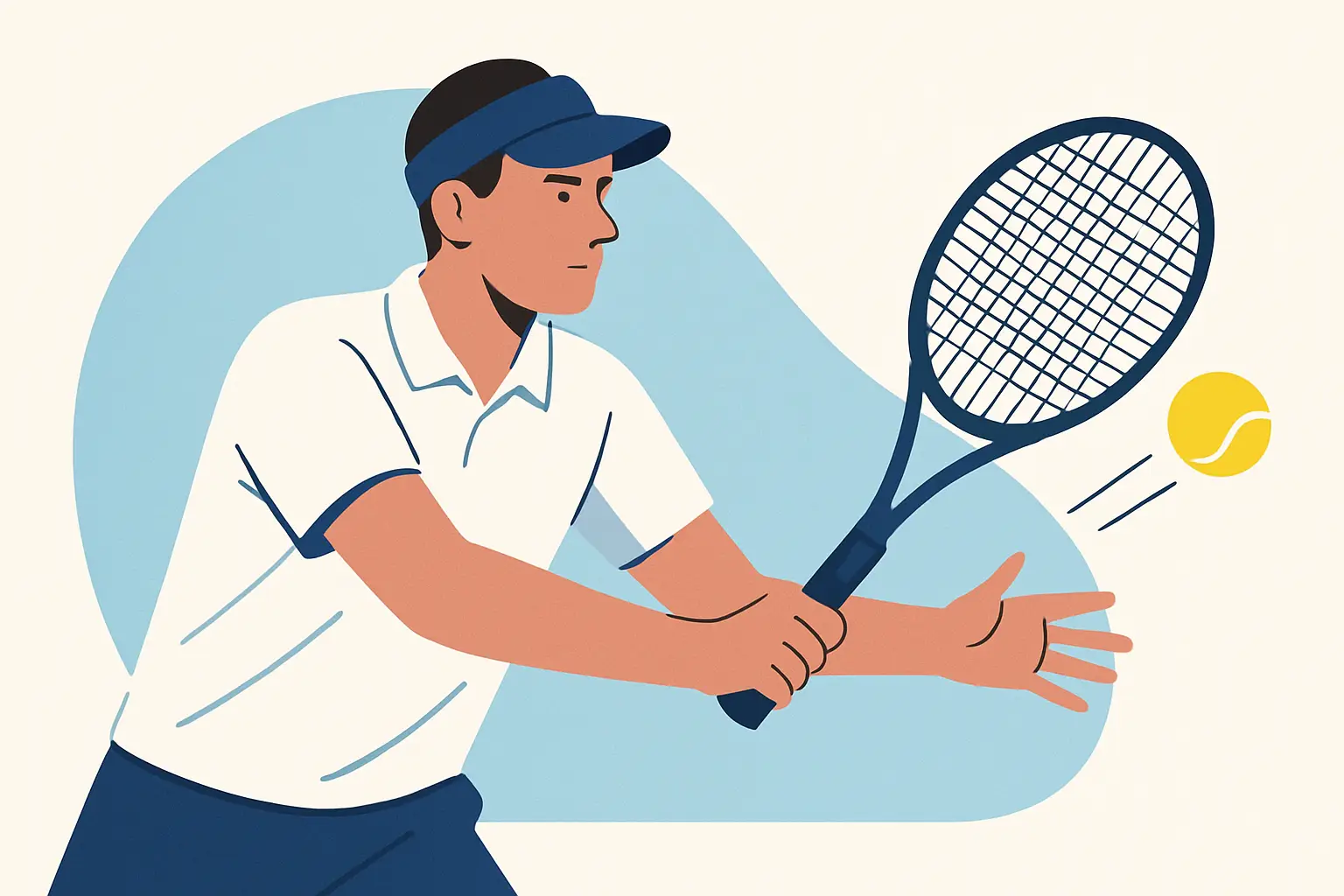
Start with this non-negotiable: your forehand should feel like the ball is “met” in front of your body, not beside it. When contact drifts back, players panic and do one of two things—open the face and float it, or roll the wrist and dump it. Either way, you lose margin.
Here’s the reset that works quickly because it removes variables:
Hold your finish for two full seconds after every hit. Not because posing is cute, but because it forces you to stop cheating the swing with late flicks. If you can’t freeze your finish, you’re improvising through contact.
Now pair that with a simple target: hit every ball crosscourt, three feet over the net, with a medium-height arc. Crosscourt gives you court length and net height. Medium arc exposes your face angle. And the freeze tells the truth.
Do that for 10 minutes and you’ll know exactly what’s wrong—without a coach guessing.
The 3-point forehand repair (what to change first)
If you want speed, you need priorities. These are the three changes that produce the biggest correction in the shortest time because they affect every ball you hit.
1) Spacing: fix your feet, not your swing
Most “bad forehands” are actually bad distance management. Players crowd the ball, jam their swing, and then blame their wrist. Or they drift away, reach, and pull off the shot.
The fastest spacing fix is to commit to one clear movement rule: on every ball you intend to drive, get your outside foot down first, then let the inside foot adjust. That outside foot is your brake. Without it, your upper body keeps moving, and contact floats.
If you’re a right-hander, your right foot is the outside foot on most forehands. Plant it earlier than you think. When players do this, the forehand immediately looks calmer because the body stops sliding through contact.
Trade-off: planting earlier reduces the temptation to overrun the ball, but it demands that you read the ball sooner. If you’re late because you watch the opponent instead of the ball, you’ll still be late. Fixing spacing is honest like that.
2) Racquet face: stabilize it through contact
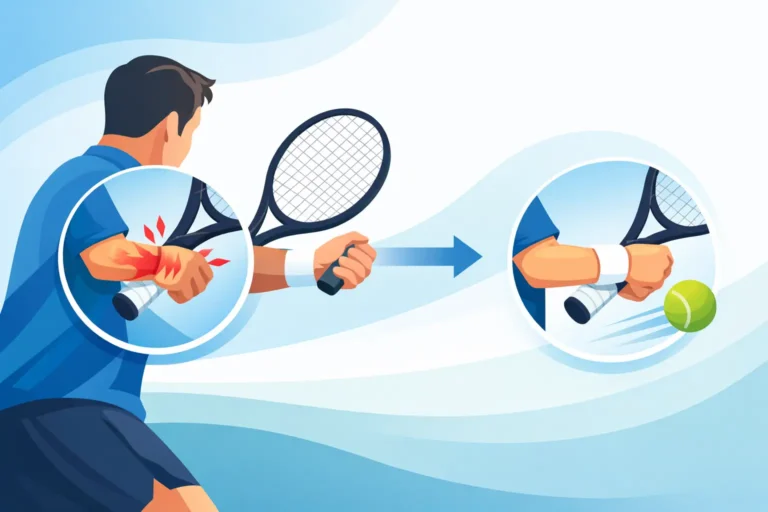
A forehand that sprays is usually a face-angle issue, not a “power” issue. The face changes because the wrist is trying to save a swing that arrived late or off-balance.
Your fastest intervention is to eliminate last-second face movement. Think “quiet wrist, firm hand” through the hitting zone. That doesn’t mean stiff. It means the wrist isn’t doing emergency steering.
Here’s a quick test: rally at 60% pace and aim for deep crosscourt. If your ball still launches long or dives into the net, your face is changing at contact. If it only breaks down at 90% pace, your timing and spacing under speed need work.
3) Contact height: stop hitting your forehand at the wrong ball level
Players complain that their forehand feels inconsistent, but they’re striking the ball at five different heights. The fix is to decide what you’re doing based on the bounce, not hope your swing adapts.
If the ball is below your hip, you’re not “rolling heavy topspin” as a default. That’s how you frame it. On low balls, prioritize a cleaner, more linear path and bigger margin over the net.
If the ball is between hip and rib height, that’s your green light. That’s where your normal forehand should live.
If the ball is shoulder-high, accept the trade-off: either give it more height and spin for safety or take it earlier. What you cannot do is wait and then try to muscle it. That’s where forehands collapse.
A 3-day forehand reset you can actually follow
Fast change requires tight feedback loops. Here’s a practical three-day plan that compresses improvement by forcing the same contact and spacing repeatedly, then stress-testing it.
Day 1: Clean contact and shape (no hero swings)
Warm up with mini-tennis for five minutes, focusing on quiet wrist and a stable face. Then move to baseline and hit only crosscourt forehands for 20 minutes. Your goal is boring: repeatable net clearance and depth.
You’ll know it’s working when your miss pattern shrinks. If you’re missing wide, your body is opening early or you’re reaching. If you’re missing long, your face is too open or you’re leaning back. If you’re missing into the net, you’re late or your face is closing.
Keep the freeze finish on every ball. That one constraint speeds up learning because it removes the ability to “fix it mid-swing.”
Day 2: Add pace without losing the pattern
Now you earn speed. Start again at 60% for five minutes. Then go to 75% for ten minutes. Then 85% for ten minutes.
The rule is simple: the moment your forehand starts spraying, you don’t keep swinging harder. You drop back one level until your pattern returns. This is how you build a forehand that holds up under pressure—by forcing yourself to own a repeatable shape at each speed.
Add a constraint that exposes spacing: every third forehand, recover back to the center mark aggressively. If your spacing collapses when you’re recovering, you’re relying on perfect setup. Matches don’t give you that.
Day 3: Stress test it like a match
Rally crosscourt for five minutes, then switch to “two cross, one line.” That means you hit two forehands crosscourt, then one down the line.
This is where most forehands fall apart because down-the-line demands better spacing and a cleaner face. If your down-the-line ball floats, your face is opening because you’re late. If it dumps into the net, you’re yanking across your body.
Finish Day 3 with 10 minutes of serve + first forehand. That’s the real world. If your forehand only works in cooperative rallies, it’s not fixed.
The quickest diagnosis: match your miss to one cause
Speed comes from accuracy. Don’t label your forehand “bad.” Label the miss.
If you shank or frame, you’re too close or you’re lifting your head early. Fix spacing first.
If you push the ball and it sits up, your contact is too far back and your body is still moving forward. Plant the outside foot sooner and meet the ball in front.
If you snap the ball into the net, you’re late and trying to manufacture spin with your wrist. Quiet the wrist and shorten the backswing until timing returns.
If your forehand breaks only under pressure, your technique isn’t the main issue—your pattern is. The stroke is different when you’re tight because you don’t have one default you trust.
When you need a guaranteed forehand correction
Some players don’t want “better.” They want solved. That’s exactly why methods that isolate the root mechanics outperform tip-based coaching. If you’re serious about the fastest way to fix a tennis forehand—and you want a system built specifically to correct groundstrokes rapidly—Mili’s Split Method at https://tennismethod.com is designed around a short, structured correction window rather than open-ended tinkering.
That matters for players chasing results and for coaches who need a repeatable process they can teach, not a grab bag of cues.
The trade-off nobody mentions: fast fixes require strict rules
A quick forehand rebuild isn’t gentle. It asks you to stop experimenting and commit to constraints: crosscourt targets, frozen finishes, controlled speed ladders, and spacing rules that feel “too early” at first.
If you’re the kind of player who changes grip mid-rally, adds extra wrist to “find spin,” or tries to rip winners to prove the forehand is fixed, you’ll slow your progress. Not because you lack ability, but because you’re refusing the structure that creates repeatability.
Choose one pattern you can reproduce on demand. Then make it harder—more pace, less time, more movement—without changing the pattern. That’s how forehands become reliable.
A forehand doesn’t need to be complicated to be dangerous; it needs to be dependable. The moment you can predict your contact, you stop hoping and start competing.